

The Search for Sunlight
Plants are solar-powered beings, and their leaves are the panels that convert sunlight into energy. When pots are crammed together, the plants start to cast shadows on one another. This triggers a fierce competition for light. A plant that finds itself
in the shade of a neighbour will start to stretch and elongate, growing thin, weak stems in a desperate attempt to reach the sun. This process, called etiolation, results in 'leggy' plants that are more susceptible to breaking and less likely to produce abundant flowers or fruits. By ensuring each plant has access to direct sunlight without being blocked, you encourage strong, compact, and healthy growth. Think of it as giving each plant its own front-row seat to the sun.
A Breath of Fresh Air
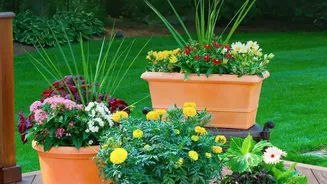
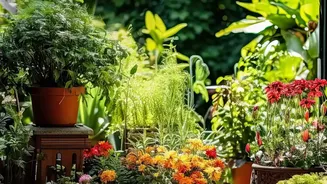
Good air circulation is one of the most overlooked aspects of container gardening, but it’s a powerful defence against disease. When plants are packed too tightly, the air around their lower leaves becomes stagnant and humid. This creates the perfect breeding ground for fungal diseases like powdery mildew, which appear as a white, dusty coating on leaves. Proper spacing allows air to flow freely between and around each plant, which helps foliage dry quickly after watering or a rain shower. The shorter the time leaves stay wet, the lower the chance that harmful fungal spores can germinate and infect the plant. Giving each pot a few extra inches of 'breathing room' can significantly reduce your reliance on fungicides and keep your garden healthy naturally.
Stopping Pests in Their Tracks
Pests love a crowded neighbourhood. When plant leaves touch, it creates a superhighway for common pests like aphids, spider mites, and mealybugs to travel from one pot to the next, turning a small issue into a widespread infestation. Overcrowded conditions also make it harder for you to spot the initial signs of trouble. Proper spacing creates physical barriers that slow the spread of pests. Furthermore, when plants aren't bunched together, it's much easier for you to inspect them, notice any early signs of damage, and intervene before the population explodes. This easy access is crucial for manual removal of pests or for applying treatments effectively without accidentally spraying neighbouring plants.
Easier Access for Better Care
A well-spaced garden is simply easier to care for. When pots aren't a jumble, you have clear access to the soil of each plant, which makes watering correctly much simpler. You can water the soil directly without splashing the leaves, further reducing disease risk. It’s also easier to provide fertiliser, check for signs of under-watering, and prune away any dead or yellowing leaves. Pruning is not just about aesthetics; removing old foliage improves airflow within the plant itself. Good spacing ensures you can get to every plant to give it the individual attention it needs to thrive, from checking the soil moisture to rotating the pot for even growth.
Stronger Roots and Bigger Rewards
Although each plant is in its own pot, the above-ground environment directly impacts what happens below the soil. Healthier leaves with plenty of sunlight and air lead to a more robust root system. When plants are stressed from competing for light and fending off diseases, their overall development suffers, including root growth. Proper spacing ensures each plant can dedicate its energy to growing strong from top to bottom. The result is a plant that is more resilient, healthier, and more productive. Ultimately, this means you get what you were hoping for: more vibrant blooms, a bigger harvest of vegetables, or more of the lush foliage you love.