

Two Missions, One Star
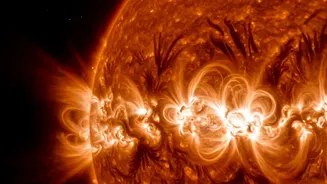
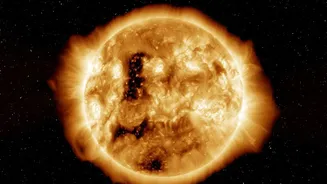
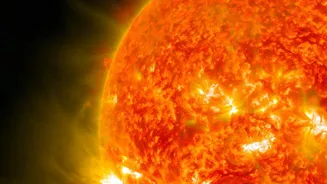
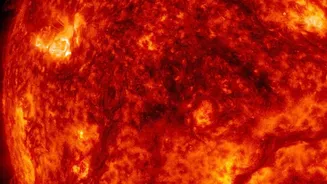
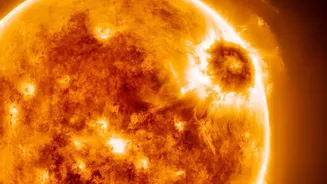
The Sun, our life-giving star, has a volatile side. It periodically unleashes colossal explosions of plasma and magnetic fields known as Coronal Mass Ejections (CMEs). These events can trigger powerful space weather storms that threaten our technologically
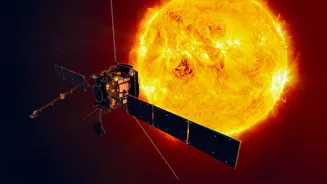
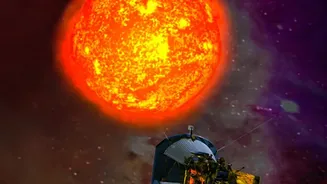
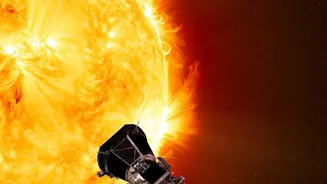
dependent society. For the first time, two of humanity's most advanced solar observatories, India's Aditya-L1 and the European Space Agency's (ESA) Proba-3, are combining their observations to decode the secrets of these eruptions right as they happen. This international partnership allows scientists to study the same solar events using different but complementary techniques, providing a more complete picture than either mission could achieve alone. The collaboration, highlighted by joint analysis of CMEs seen in late 2025, marks a new chapter in solar physics, bringing together data from two uniquely positioned spacecraft to probe one of the Sun's greatest mysteries.
Aditya-L1: India’s Eye on the Sun
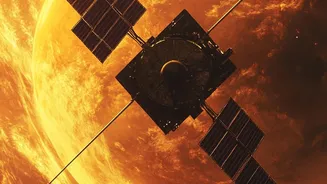
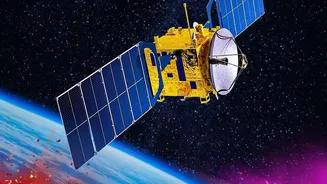
Launched by ISRO in September 2023, Aditya-L1 is India's first dedicated mission to study the Sun. It is strategically positioned at the first Lagrange point (L1) of the Sun-Earth system, about 1.5 million kilometres from Earth. This vantage point gives it a continuous, uninterrupted view of the Sun, free from the eclipses or occultations that hinder ground-based observation. Aditya-L1 is equipped with seven sophisticated instruments designed to observe the Sun's outermost layers — the photosphere, chromosphere, and corona. A key instrument in this partnership is the Visible Emission Line Coronagraph (VELC). The VELC uses spectroscopy to analyse the light from the corona, allowing scientists to measure properties like the temperature, velocity, and density of the superheated plasma that makes up these layers. This is crucial for understanding the conditions that lead to CMEs.
Proba-3: The Artificial Eclipse
ESA's Proba-3 mission, launched by an ISRO PSLV rocket in December 2024, is a marvel of engineering. It is the world's first precision formation-flying mission, consisting of two separate satellites. The 'Occulter' spacecraft flies about 150 metres ahead of the 'Coronagraph' spacecraft, precisely blocking the brilliant face of the Sun. This manoeuvre creates a sustained, near-perfect artificial solar eclipse in space, allowing the second satellite's instrument, ASPIICS, to get an incredibly clear view of the faint, mysterious solar corona very close to the Sun's surface—a region notoriously difficult to observe. This innovative design drastically reduces the stray light that plagues traditional single-spacecraft coronagraphs, enabling the capture of much finer details of the corona's structure and the birth of solar eruptions.
The Power of a Combined View
The synergy between Aditya-L1 and Proba-3 is what makes this partnership so powerful. While Proba-3's ASPIICS provides sharp, high-fidelity images of a CME's shape, mass, and movement, Aditya-L1's VELC provides spectroscopic data, giving independent measurements of the eruption's density and thermal energy. By combining these two datasets for the same event, scientists can cross-check their findings and build a much more robust and detailed model of a CME's early evolution. Initial joint studies of CMEs in September 2025 demonstrated this potential. VELC caught the eruptions in their earliest moments, while ASPIICS tracked their structure as they expanded. For the first time, researchers could accurately estimate the mass, density, and energy of CMEs very close to the Sun, filling a critical gap in their knowledge.
Why It Matters for Earth
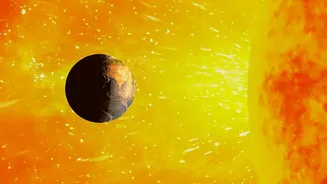
Understanding how solar eruptions develop is not just an academic exercise. CMEs are the primary driver of severe space weather, which can have tangible and disruptive effects on Earth. These storms can induce currents in power grids leading to blackouts, damage critical satellite electronics, disrupt GPS navigation, and interfere with radio communications used by aircraft. In an increasingly connected world, our vulnerability to space weather is greater than ever. By studying the birth of CMEs, the Aditya-L1 and Proba-3 partnership provides crucial data that will help improve space weather forecasting models. Better predictions give satellite operators, power grid managers, and airlines more time to take protective measures, safeguarding the vital infrastructure that underpins modern life.