



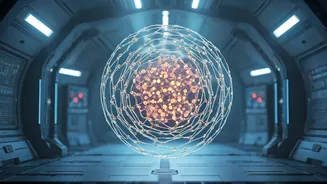

What Exactly Is a SpudCell?
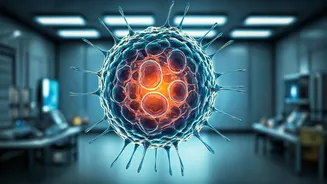
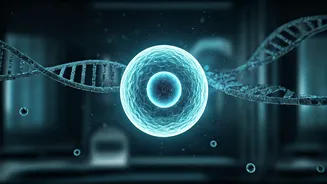
A SpudCell is a tiny, artificial cell built entirely from non-living chemical components. Researchers at the University of Minnesota, led by Dr. Kate Adamala, assembled these cells from the ground up. They started with a 'soup' of molecules, including
proteins and genes from E. coli and a virus, and added lipid building blocks. These lipids spontaneously formed membranes, creating small bubble-like compartments. Some of these bubbles captured the right mix of ingredients to carry out life-like behaviors. The name 'SpudCell' is a nod to its potato-like shape, the dawn of the space age with Sputnik, and Dr. Adamala's Polish heritage. While it's not the first synthetic cell, it is the first created this way to complete a full cycle of growth and division over multiple generations.
The 'Synthetic DNA' Behind It
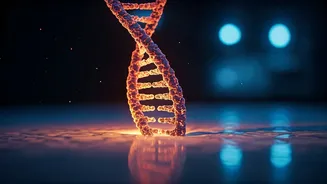
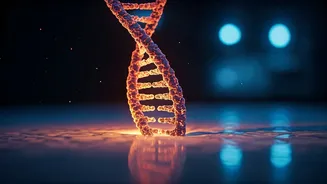
At the heart of the SpudCell is its synthetic DNA, which acts as its operating instructions. Unlike a human genome with about 3 billion base pairs, the SpudCell's entire genome is incredibly minimal, at just 90,000 base pairs containing only 36 genes. This genetic code isn't on a single chromosome but is split across seven separate DNA plasmids. This modular design allows scientists to program different functions independently. To be clear, this isn't DNA taken from a living thing and modified; it's constructed artificially using a process called DNA synthesis. This technology allows scientists to 'write' DNA sequences by chemically assembling the four key bases (A, C, G, and T), effectively creating a blueprint for the cell's actions from scratch.
How Does It Work?
The SpudCell demonstrates a simplified life cycle. To 'eat,' it fuses with smaller, engineered bubbles in its liquid environment called 'feeder' liposomes. These feeders supply it with the nutrients, enzymes, and other materials it needs to grow. As the SpudCell grows, its DNA gets copied. It then divides, but not through the complex internal scaffolding, or cytoskeleton, that natural cells use. Instead, proteins on the SpudCell's membrane create physical strain, eventually causing the bubble-like structure to split in two, creating a new generation. Scientists even observed a form of evolution, where a mutant SpudCell designed to be better at absorbing nutrients outcompeted the original version.
Is It Actually Alive?
This is the big question, and the answer is: not quite. The researchers themselves are hesitant to call it 'alive.' SpudCell has many hallmarks of life—it grows, copies its genes, and reproduces. However, it's extremely dependent on its environment. It cannot make its own building blocks or energy; it has to be 'fed' everything. Crucially, it cannot build its own ribosomes, the essential molecular machines that make proteins, and relies on a pre-supplied stock that eventually runs out after a few generations. It also can't clear its own waste. Think of it less as a fully independent life form and more as a remarkable proof-of-concept that reconstitutes life's behaviors from non-living parts.
Why This Breakthrough Matters
The creation of SpudCell is a major milestone in synthetic biology. By building a cell from the ground up, scientists can better understand the absolute minimum requirements for life. This could shed light on how life might have first emerged from simple chemistry. On a more practical level, the technology opens the door to creating microscopic biological factories. Future, more robust versions could be designed to produce drugs like insulin, biofuels, or other valuable chemicals more efficiently than using modified natural cells. It also represents a new chassis for biological engineering—a basic platform that other researchers can build upon. To facilitate this, the research team has launched a public-benefit institution called Biotic to keep the technology open and encourage global collaboration.