







For anyone hoping for a quick drop in what they pay for petrol, diesel, or electricity, the world’s top energy watchdog has a sobering message. The head of the IEA, Fatih Birol, has warned that a return to lower prices is not on the horizon.
An Expert's Stark Warning
Fatih Birol,
the Executive Director of the International Energy Agency (IEA), recently delivered a stark reality check on the state of global energy markets. Speaking at the Singapore International Energy Week, Birol stated that he sees no 'credible pathway' for energy prices to return to the levels seen before recent geopolitical conflicts. His projection is that the high-price environment for crude oil, fuel, and natural gas is likely to persist into 2027. With oil prices flirting with $120 a barrel, Birol noted that while some developed economies might find this affordable, it is having a major negative impact on the trade deficits and budgets of many other countries, especially in Asia. This warning comes from the head of the world's most authoritative source for energy analysis, an agency created to advise industrialised nations on energy security. When the IEA speaks so clearly, governments and businesses listen.
Geopolitics Tighten the Market
The primary driver behind Birol's grim forecast is the severe tightening of energy markets due to geopolitical conflict. He specifically pointed to the ongoing tensions in the Middle East, which have disrupted key global energy arteries. The conflict, which escalated in late February 2026, has upended a market that was previously expected to see a surplus. The Strait of Hormuz, a critical chokepoint through which about one-fifth of global oil supply travels, has seen major disruptions. These events have introduced a level of risk and uncertainty that keeps prices stubbornly high. Birol noted that 'trust is the scarcest commodity in the energy markets today', highlighting how the unstable geopolitical landscape is preventing markets from finding a stable, lower-priced equilibrium.
A Persistent Supply Crunch
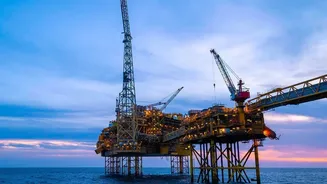
Beyond immediate conflicts, the market is grappling with a deeper, structural issue: a lack of investment in new oil and gas production. While the IEA has long championed the transition to clean energy, Birol has also recently stressed the need for continued investment in existing oil and gas fields simply to maintain current output levels and ensure energy security. A significant portion of current investment, around $360 billion out of $400 billion, is needed just to offset the natural production decline from existing fields. This underinvestment creates a fragile supply balance. Compounding this, the market for refined products like diesel and gasoil is also under pressure. The IEA's October Oil Market Report pointed to a crunch in these markets that is expected to last until at least the middle of 2027, due in part to deferred refinery maintenance.
The Impact on India
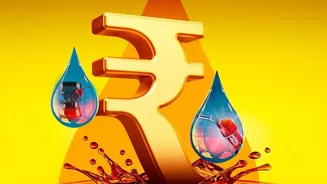
For India, this global pressure translates directly into economic vulnerability. As the world's third-largest oil consumer, India is heavily reliant on imports, which meet nearly 90% of its crude oil needs. This dependence, which stood at 88.7% for the 2026 fiscal year, makes the Indian economy highly exposed to global price shocks. According to one analysis, every $10 increase in the price of a barrel of oil adds approximately $18 billion to India's annual import bill, equivalent to about 0.4% of its GDP. Between April and August 2026, India paid 48% more for a slightly lower volume of crude oil compared to the previous year, as the average price per barrel shot up. These higher costs ripple through the economy, affecting everything from transportation expenses to household budgets and putting pressure on inflation.
The Accelerated Shift to Electricity
One of the long term consequences of this prolonged energy crisis, according to Birol, will be an acceleration of the 'Age of Electricity'. Persistently high fossil fuel prices provide a powerful incentive for countries to speed up their transition to alternative energy sources, including renewables and nuclear power. The IEA's data from 2025 already showed global electricity demand growing more than twice as fast as total energy demand. While this transition is essential for energy security and climate goals, it doesn't offer a short term fix for prices. Building new power plants and upgrading grid infrastructure takes years. In the interim, consumers and industries will have to navigate a world where cheap energy is, for now, a thing of the past.