




Bhoger Khichuri & Labra
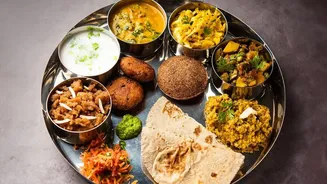
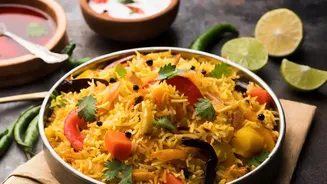
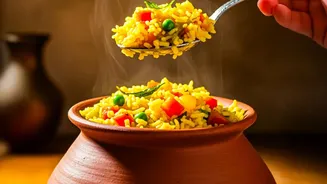
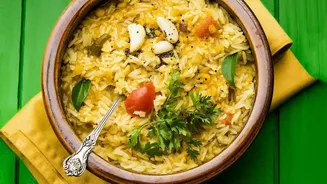
No Durga Puja experience is complete without Bhoger Khichuri. This isn't just any khichuri; it's a sacred offering, or 'bhog', made with roasted moong dal, fragrant gobindobhog rice, and mild spices. Cooked without onion or garlic, its soulful aroma fills
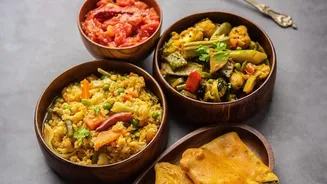
the pandals. It symbolises purity and unity, as it's served to everyone, breaking down social barriers. It is almost always paired with Labra, a medley of seasonal vegetables cooked together. This colourful, lightly spiced side dish represents harmony and gratitude for nature's bounty, perfectly complementing the wholesome khichuri.
Luchi & Aloor Dum
A quintessential Bengali breakfast that becomes a festive staple during Puja is the iconic duo of Luchi and Aloor Dum. Luchis are soft, puffy, deep-fried breads made from refined flour that are light as air. They are the perfect vehicle for scooping up Aloor Dum, a flavourful and spicy potato curry. The potatoes are often slow-cooked in a thick, tangy gravy rich with ginger, tomatoes, and a blend of aromatic spices. This combination is pure comfort food, enjoyed not just for breakfast but often as a snack between pandal-hopping sessions. It’s a dish that evokes nostalgia and the feeling of a special occasion.
Kosha Mangsho
For many, the grand feast on Ashtami or Navami is defined by one dish: Kosha Mangsho. This is a slow-cooked mutton curry where 'kosha' refers to the process of sautéing the meat with spices for a long time until the oil separates. This patient cooking method results in incredibly tender mutton and a thick, dark, and intensely flavourful gravy that clings to the meat. Prepared with mustard oil, onions, ginger-garlic, and a host of whole and ground spices, it is a rich and indulgent dish reserved for special occasions. It represents the celebratory, feasting aspect of Durga Puja, often seen as the culinary high point of the festival.
Basanti Pulao
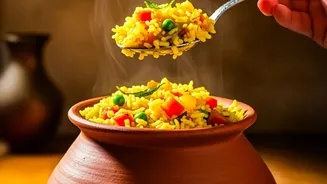
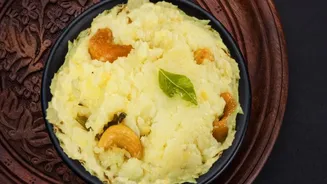
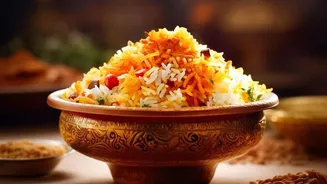
Adding a vibrant yellow hue to the festive platter is Basanti Pulao, also known as Mishti Pulao. 'Basanti' means yellow, the colour of spring and festivity. This fragrant rice dish is made with aromatic gobindobhog or basmati rice, ghee, and a delicate balance of sweet and savoury flavours. The sweetness comes from a touch of sugar, while cashews and raisins add texture and richness. Mildly spiced with garam masala, bay leaves, and cinnamon, its gentle aroma and beautiful colour make it a celebratory dish that pairs wonderfully with a spicy curry like Kosha Mangsho or a vegetarian side.
Sandesh & Mishti Doi
A Bengali celebration is incomplete without 'mishti' (sweets). During Durga Puja, two legends take the spotlight: Sandesh and Mishti Doi. Sandesh is a delicate sweet made from fresh cottage cheese (chhena). It can be soft and crumbly or firm, often flavoured with saffron, cardamom, or nolen gur (date palm jaggery). Mishti Doi, on the other hand, is a traditional sweetened yogurt. It’s prepared by caramelizing sugar, which gives it its characteristic brownish colour and distinct taste, and is then set in earthen pots that absorb excess water, making it thick and creamy. Both are essential for concluding a festive meal on a perfectly sweet note.