

A Dangerous Blind Spot
For decades, our global tsunami warning system has been built around seismometers, which detect the ground-shaking force of earthquakes. This works well for most tsunamis, but it leaves a critical blind spot for those generated by volcanoes. Volcanic
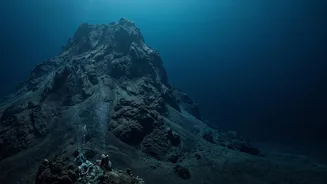
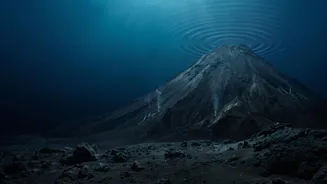
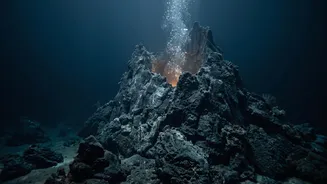
tsunamis are rare, making up about 5% of all events, but they are exceptionally unpredictable. They can be caused by massive underwater explosions, the collapse of a volcano's flank, or pyroclastic flows hitting the water. These events often produce weak seismic signals that can be easily missed by traditional earthquake-focused monitoring networks, giving coastal communities little to no warning. The 2018 eruption of Anak Krakatau in Indonesia, for example, caused a flank collapse that triggered a tsunami, resulting in tragedy with minimal warning. Events like these highlight the urgent need for a different way to see these disasters coming.
The Sound of an Impending Wave
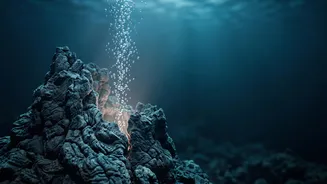
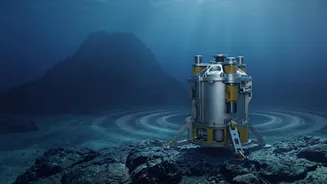
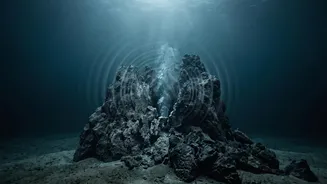
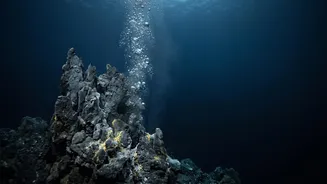
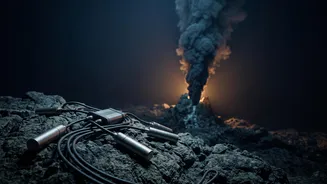
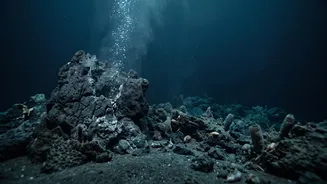
The key to a better warning system, researchers now believe, is to listen. The same violent forces that generate a volcanic tsunami—like a caldera collapse or a massive underwater landslide—also create powerful sound waves that travel through the ocean. These acoustic signals, called T-waves, are essentially the underwater 'boom' of the volcano. Using underwater microphones known as hydrophones, scientists can detect these sounds from thousands of kilometres away. The catastrophic 2022 eruption of the Hunga Tonga-Hunga Ha'apai volcano provided a wealth of data, proving to be a watershed moment for this field of study. Researchers analysing its acoustic signature discovered that the loudest underwater sound wasn't from the initial explosion, but from the subsequent collapse of the volcano's caldera about 90 minutes later—the very event that generated the most destructive tsunami waves.
A Race Against Time That Sound Wins
The single greatest advantage of using sound is speed. Hydro-acoustic signals travel through water at about 1.5 kilometres per second. A tsunami wave, by contrast, travels much slower. This means the sound of a caldera collapse or underwater landslide can reach monitoring stations long before the resulting wave makes landfall, providing a crucial head start for evacuations. In the case of the Hunga Tonga eruption, the acoustic signal from the caldera collapse was detected at stations over 2,000 kilometres away. This time difference—minutes, or even hours—could be the difference between safety and catastrophe for at-risk coastal populations. This new method complements existing systems like DART buoys, which are excellent at confirming a tsunami is underway but only when the wave physically reaches them, offering less warning time for nearby areas.
Building a Global Listening Network
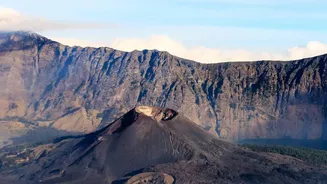
Fortunately, we don't have to start from scratch. A global network of hydrophones already exists, maintained by the Comprehensive Nuclear-Test-Ban Treaty Organization (CTBTO) to listen for clandestine nuclear explosions. These ultra-sensitive underwater ears have been repurposed by scientists before to monitor everything from whale songs to seismic activity. Researchers are now developing systems, some using AI, that can tap into this real-time data to specifically identify the acoustic fingerprints of tsunami-generating volcanic events. While the existing network is a fantastic resource, its geographic coverage is sparse. Expanding it and ensuring more stations provide real-time data will be critical to creating a truly effective global warning system for all types of tsunamis. For a country like India, with its extensive coastline and the active Barren Island volcano in the Andaman Sea, such advancements in monitoring could one day be invaluable.
The Challenges Ahead
Despite its immense promise, the technology is still in development. A key challenge is distinguishing the specific sound of a dangerous volcanic event from the general cacophony of the ocean, which includes noise from shipping, marine life, and smaller seismic events. Training AI models to reliably identify these unique signatures requires vast amounts of data, which is difficult to gather for such rare events. However, by combining acoustic data with other monitoring methods like satellite imagery and ground-based sensors, scientists are confident they can build a more robust and comprehensive picture of what is happening beneath the waves. The goal is to create a system that not only issues warnings faster but also reduces the number of false alarms that can erode public trust.