








A Tale of Deception and Revenge
The core of the apprehension surrounding eclipses, or 'Grahan', lies in Hindu mythology, specifically the story of the Samudra Manthan (the churning of the ocean). According to legend, when the devas (gods) and asuras (demons) churned the cosmic ocean for
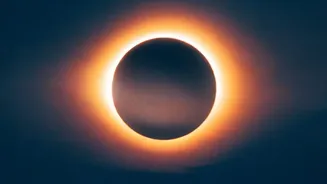
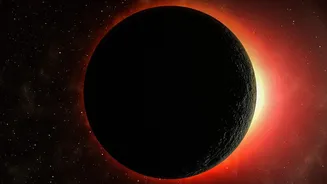
the nectar of immortality, an asura named Svarbhanu disguised himself as a god to get a sip. The sun (Surya) and moon (Chandra) deities spotted the imposter and alerted Lord Vishnu, who swiftly beheaded the demon with his Sudarshana Chakra. However, because the nectar had already touched his throat, the demon's head and body became immortal. The head became known as Rahu and the serpent-like body as Ketu. Burning with a desire for revenge against the sun and moon for exposing him, Rahu is believed to periodically chase and swallow them, causing solar and lunar eclipses. Because Rahu has no body, the sun or moon eventually re-emerges, ending the eclipse. This story frames the eclipse not as a natural alignment, but as a temporary victory of darkness over light.
An Astrological Disturbance
Beyond mythology, Vedic astrology, or Jyotish Shastra, plays a crucial role. In this system, Rahu and Ketu are not just mythological figures but are considered 'shadow planets' or lunar nodes—points where the moon's orbit intersects the sun's path. Eclipses occur when the sun and moon align with these powerful points. Astrologically, eclipses are seen as periods of disruption and heightened negative energy. It's believed that the natural cosmic order is disturbed, which can have adverse effects on human lives, destinies, and karmic balances. The sun, a primary life-giving force, being obscured is considered a particularly bad omen, signifying a period of vulnerability and potential adversity. This belief leads to the widespread perception of eclipses as fundamentally inauspicious events.
Rituals of Protection and Purification
The belief in an eclipse's malefic energies gives rise to a host of protective rituals. One of the most common is fasting. Many people refrain from cooking, eating, and drinking during the eclipse, a period known as 'Sutak'. It is believed that the absence of sunlight increases harmful microorganisms and that any food prepared or consumed during this time becomes impure or contaminated. Pregnant women are especially advised to take precautions, often staying indoors to shield the unborn child from supposed harmful energies that could cause deformities. Using sharp objects like knives or needles is also discouraged. Temples across the country close their doors, as it's believed the divine idols are vulnerable to the negative atmosphere. After the eclipse concludes, a period of purification begins. It is customary to take a bath, change into fresh clothes, and sprinkle Ganga jal (holy water) to cleanse the home. Many also perform acts of charity, which are believed to be especially meritorious after an eclipse.
Modern India's Blended Approach
In contemporary India, a fascinating blend of scientific understanding and traditional observance exists. While schools and science clubs organize viewings with protective glasses, and many urbanites treat it as a natural wonder, the ancient beliefs still hold significant sway. It's not uncommon for families to follow the rituals as a matter of cultural practice or out of respect for elders, even if they intellectually understand the scientific explanation. This duality is a hallmark of modern Indian life, where ancient stories provide a framework for cosmic events, and science offers a different, yet parallel, explanation. People may watch the celestial spectacle on television while simultaneously observing a fast, embodying a unique synthesis of faith and reason.