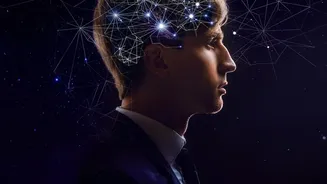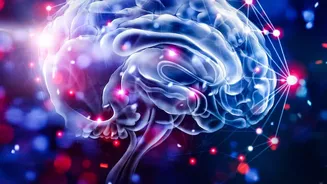








What if you could control a computer with your thoughts or see without using your eyes? Once the stuff of science fiction, this is the frontier Neuralink is pioneering with its brain-computer interface (BCI) technology.
Decoding the Brain's Language
At its core, Neuralink is building
a high-bandwidth communication channel between the human brain and external devices. The company, founded by Elon Musk, has developed a small, coin-sized implant called 'the Link' or 'N1'. This device is surgically placed in the skull and connected to the brain via thousands of ultra-thin, flexible electrode 'threads'. A sophisticated surgical robot, the 'R1', inserts these threads with micron-level precision into the cortex, the brain's outer layer, to avoid blood vessels. These electrodes detect the tiny electrical signals, or 'spikes', that neurons use to communicate. The N1 chip processes these signals, filters them, and transmits the data wirelessly via Bluetooth to a computer or smartphone, where software decodes the user's intent.
Giving Voice to the Voiceless
Neuralink's first major programme, the PRIME Study (Precise Robotically Implanted Brain-Computer Interface), focuses on communication and control for individuals with severe paralysis, such as quadriplegia from spinal cord injuries or ALS. This initiative, which Neuralink calls 'Telepathy', aims to restore digital autonomy. The first human trial participants have demonstrated remarkable abilities, learning to control a computer cursor simply by thinking about moving their hand. This has allowed them to play online chess, browse the internet, and even play complex video games. The goal is to translate intended movements into digital commands, giving people who have lost the ability to move or speak a new way to interact with the world and regain their independence. The FDA has also granted Neuralink a 'Breakthrough Device Designation' for a speech restoration device, signalling a fast-tracked regulatory path for this technology.
A New Light for the Blind
The second major frontier for Neuralink is vision. The 'Blindsight' programme is an ambitious effort to restore a form of sight to people who are blind, even those who have been so from birth or have lost their eyes entirely. This technology bypasses the eyes and optic nerve. Instead, it uses an external camera to capture visual information. That data is then translated into patterns of electrical stimulation, which are sent directly to the implant in the brain's visual cortex. The brain interprets these stimulation patterns as flashes of light called phosphenes. By generating thousands of these points of light simultaneously, the system aims to construct a low-resolution visual map of the user's surroundings. Musk has described the initial output as being similar to 'Atari graphics', but with the potential to eventually become higher-resolution.
The Road Ahead: Hurdles and Hopes
While the progress is historic, the road to widespread use is long and filled with challenges. The initial PRIME Study saw some technical issues, such as a partial retraction of the electrode threads in the first participant, which temporarily reduced performance before stabilising. For Blindsight, the challenges are even more significant. Experts note that creating a coherent image from phosphenes is incredibly complex, and it is uncertain how the brain, especially in someone blind since birth, will interpret these artificial signals. Regulatory approval from bodies like the FDA is a multi-year process involving rigorous safety and efficacy trials. Despite these hurdles, Neuralink is planning for scale, aiming to automate its surgical process and move to high-volume production. The company's work represents a major step in neurotechnology, one that walks a fine line between medical miracle and profound ethical questions about the future of human-AI integration.