






The New Digital Rulebook
Across India, schools and universities are grappling with a fundamental question: what is the right way to use AI in education? The response isn't an outright ban. Instead, institutions are establishing guidelines that focus on transparency and responsible
use. For students, this means the era of quietly using AI tools to draft essays is ending. The new focus is on disclosure. At the university level, the University Grants Commission (UGC) has signalled that failing to acknowledge AI assistance in PhD theses could be treated as plagiarism. The rules vary by institution, but a common theme is emerging: students are responsible for the accuracy and originality of their work, even when AI is used as a support tool. This often involves citing the AI tool, just like any other source, and ensuring the final submission reflects the student's own critical thinking.
Homework Gets an Upgrade
The traditional homework assignment is evolving. With AI able to produce an essay in seconds, educators are redesigning tasks to focus on skills that machines can't replicate. This means a shift away from assignments that test memory and toward those that demand critical thinking. For example, instead of just writing a report, a student might be asked to critique an AI-generated report, identify its biases, and improve its arguments. Teachers are also using AI to their own advantage, creating personalised learning materials and generating practice questions. The goal is to use AI as a collaborator that enhances learning, not as a shortcut that prevents it. For students, this means homework may become less about finding the right answer and more about asking the right questions.
The Cheating vs. Co-Pilot Debate
Academic integrity is at the heart of the AI debate. Where is the line between using AI as a helpful co-pilot and using it to cheat? Institutions are working to provide clarity. The UGC’s guidelines for PhD scholars, for instance, set different penalties based on the percentage of AI-generated content detected. Many universities are adopting a similar stance, clarifying that while AI can be used for brainstorming or improving language, the core ideas and analysis must come from the student. To enforce this, many are turning to advanced detection tools that can spot machine-generated text. However, research shows a gap can emerge between students who use AI to complete work faster and their actual learning, with one study noting lower exam scores among students who relied heavily on AI for homework. As a result, some schools are bringing assessments back into the classroom with in-person writing and oral exams to ensure work is genuinely the student's own.
What's Happening in Indian Schools?
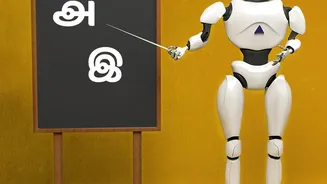
India is proactively integrating AI into its education system, aligning with the National Education Policy 2020. Starting from the 2026-27 academic year, the Central Board of Secondary Education (CBSE) has made computational thinking and AI a mandatory part of the curriculum from Class 3 onwards. The focus for younger students is on activity-based learning to build logical thinking, while middle schoolers are introduced to foundational AI concepts. This is not about creating a separate AI subject but integrating these skills across disciplines like maths, science, and languages. The initiative is backed by extensive teacher training programs to equip educators for this new reality. Unlike some Western school districts that have experimented with bans, the sentiment in India appears more open, with a recent survey showing 61% of Indians oppose banning AI from classrooms, viewing it as a vital tool for future readiness.