





A Time of Caution, Not Celebration
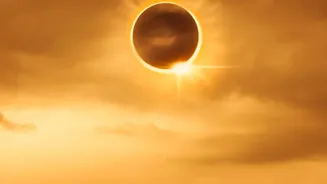
For many in India, an eclipse, or 'Grahan', is not an astronomical wonder to be observed, but a period of caution rooted in centuries-old beliefs. The practices are specific and widely followed. Kitchens are shut, with no cooking or eating taking place
for the duration of the eclipse. Many people fast, believing that consuming food during this time can lead to indigestion or illness. Pregnant women, in particular, are advised to stay indoors to protect their unborn children from supposed negative influences. Some traditions even advise against using sharp objects like knives or scissors during the eclipse, fearing it could cause birth defects. After the event, a thorough cleaning is common, with many taking a bath and preparing fresh food to cleanse away any lingering negativity.
The Mythological Tale of Rahu and Ketu
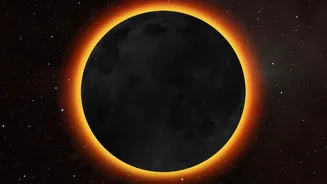
The foundation for these beliefs lies deep in Hindu mythology, specifically the story of the demon Svarbhanu. According to ancient texts like the Puranas, during the 'Samudra Manthan' (the churning of the cosmic ocean), Svarbhanu disguised himself as a god to drink the nectar of immortality, Amrita. The sun god (Surya) and moon god (Chandra) spotted the deception and alerted Lord Vishnu, who swiftly beheaded the demon with his Sudarshana Chakra. But because the nectar had already touched his lips, both parts of the demon became immortal. The head became known as Rahu, and the body as Ketu. Filled with vengeance against Surya and Chandra for exposing him, Rahu is said to periodically chase and swallow the sun or moon, causing an eclipse. Since Rahu has no body, the sun or moon eventually re-emerges, ending the Grahan. This act of swallowing is seen as an inauspicious event, rendering the skies and atmosphere impure.
Concerns for Food and Unborn Children
The core belief driving the fasting practice is that the absence of sunlight during an eclipse allows harmful microorganisms to multiply, contaminating food and water. It's thought that a form of negative energy or impure rays are released, which can make cooked food poisonous or harmful. Some spiritual leaders explain that the energy of an eclipse accelerates the process of decay, turning nourishing food into something that takes away awareness. This is why many families discard any food or water left out during the event and prepare fresh meals only after it has passed. The warnings for pregnant women are particularly strong. Traditional beliefs hold that exposure to the eclipse can harm the fetus, potentially causing physical deformities or birthmarks. These ideas are deeply ingrained in cultural memory and are often followed to ensure peace of mind, even by those who may be skeptical.
The Scientific Perspective
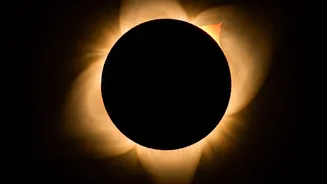
From a scientific standpoint, an eclipse is a natural and predictable alignment of celestial bodies. A solar eclipse occurs when the Moon passes between the Sun and Earth, and a lunar eclipse happens when Earth is between the Sun and Moon. Scientists affirm that there are no mysterious or harmful rays emitted during an eclipse. The only real danger is to eyesight, as looking directly at a solar eclipse without proper, specialized eye protection can cause permanent retinal damage. The idea that food becomes contaminated or that eclipses can affect a pregnancy has no basis in modern science. Doctors and astronomers consistently debunk these myths, explaining that the change in ambient light and a slight drop in temperature have no effect on food safety or human health. The belief may have originated in ancient times when the sudden darkness would have been frightening and a practical concern for food being contaminated by insects in the open.
A Bridge Between Belief and Modernity
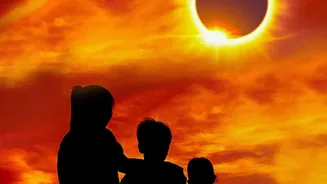
In contemporary India, families navigate these two opposing views in various ways. Some adhere strictly to all the traditional rules, seeing it as a vital part of their spiritual and cultural duty. Others take a hybrid approach, perhaps choosing to fast but not worrying about staying indoors. And many, especially in urban areas, have fully embraced the scientific view, turning eclipses into educational opportunities for their children. Astrologically, eclipses are still seen as powerful moments of change and transformation, marking endings and new beginnings. Ultimately, the decision to follow eclipse-related customs is a personal one, reflecting a complex interplay between faith, tradition, family influence, and scientific knowledge. It showcases how ancient stories continue to shape cultural practices in the 21st century.