









A Landmark Mission Hits a Snag
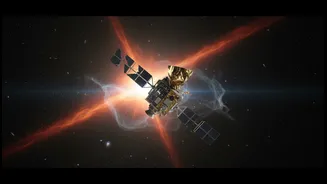
On July 7, GalaxEye confirmed that it had lost communication with its maiden satellite, Mission Drishti. The satellite, launched on May 3, 2026, aboard a SpaceX Falcon 9 rocket, encountered the issue during the final stage of its Launch and Early Orbit
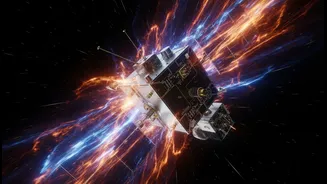
Phase (LEOP). According to the company's initial analysis, the culprit was a severe geomagnetic solar storm. The radiation from this space weather event is believed to have damaged a critical onboard system, causing communication to become intermittent before it was lost entirely. While engineers are still trying to re-establish contact, GalaxEye has been transparent, stating that the likelihood of a full recovery is low.
What Was Mission Drishti?
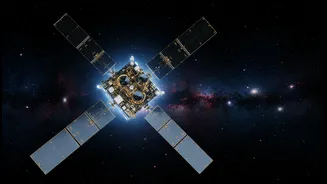
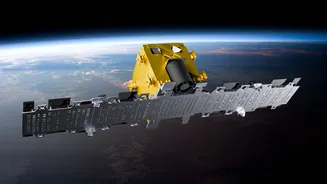
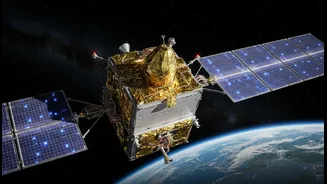
Mission Drishti wasn't just another satellite; it was a trailblazer. Billed as the world's first 'OptoSAR' satellite, it carried a unique payload that combined two powerful imaging technologies on a single platform. The first was a standard optical sensor, which captures images much like a regular camera and works best in clear, sunlit conditions. The second was a Synthetic Aperture Radar (SAR), which uses microwave signals to create detailed images of the Earth's surface regardless of cloud cover, smoke, or darkness. By fusing these two data streams, Drishti promised to deliver an unprecedented level of detail and reliability for Earth observation. At approximately 190 kg, it was also the largest Earth observation satellite ever built by a private Indian company, representing a significant milestone for the nation's burgeoning space-tech ecosystem.
Not a Failure, But a 'Fast-Fail'
Despite the communication loss, GalaxEye is framing the mission as a crucial learning experience rather than a total failure. In the weeks before the anomaly, the satellite successfully completed a majority of its initial objectives. The startup's mission control centre in Bengaluru validated several key technologies, including the successful deployment of spacecraft systems, attitude control manoeuvres, and the functioning of onboard computing and communication hardware. In a statement, GalaxEye co-founder and CEO Suyash Singh emphasized that the mission provided "invaluable engineering insights" that will directly strengthen future missions. This approach is common in the high-risk, high-reward world of space technology, where early-stage setbacks often provide the critical data needed for long-term success.
The Bigger Picture for Indian Space-Tech
The setback for Mission Drishti is being watched closely, as it serves as a real-world test for the resilience of India's private space industry. For years, the sector has been dominated by the Indian Space Research Organisation (ISRO). However, recent government policies have opened the doors for startups like GalaxEye, founded in 2021 by a team of IIT Madras alumni, to innovate and build sovereign capabilities. The Drishti mission, even with its premature end, demonstrated that a private Indian firm could design, build, and operate a complex, world-first satellite from its own mission control centre. This capability is vital for applications spanning defence, disaster management, agriculture, and urban planning.
What Happens Next?
GalaxEye is already looking ahead, determined to build on the lessons learned from Mission Drishti. The company has announced plans to accelerate its roadmap, aiming to launch two new and improved OptoSAR satellites within the next 24 months. A key learning from the incident is the need for greater control over the entire production process. The company is now planning to bring a significant portion of its supply chain, manufacturing, and satellite development in-house. This strategic shift is intended to enhance quality control and reliability for its next generation of spacecraft. The incident, while a blow, appears to have hardened the company's resolve to push forward in its quest to provide all-weather, 24/7 satellite imagery.