




From Physician to Pioneer
Dr. Anil Menon’s path to the stars is a story of remarkable dedication across medicine, military service, and aerospace innovation. Born in Minneapolis, Minnesota, to parents who immigrated from India and Ukraine, Menon's career is marked by a consistent
presence at the forefront of high-stakes environments. Before being selected for NASA's 2021 astronaut class, he served as an emergency medicine physician and a flight surgeon in the U.S. Air Force, undertaking deployments in Afghanistan and providing medical support during disaster relief efforts in Haiti and Nepal. His connection to India includes a year spent as a Rotary Ambassadorial Scholar to support polio vaccination initiatives. Menon was also SpaceX's first flight surgeon, where he was instrumental in developing the medical program for the company's historic first human spaceflights, including the Demo-2 mission.
The Mission Aboard the ISS
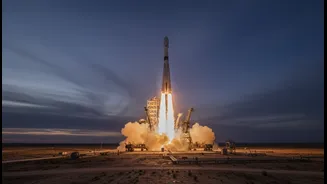
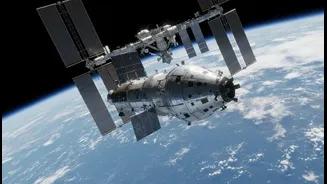
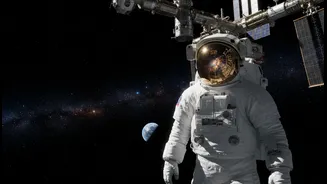
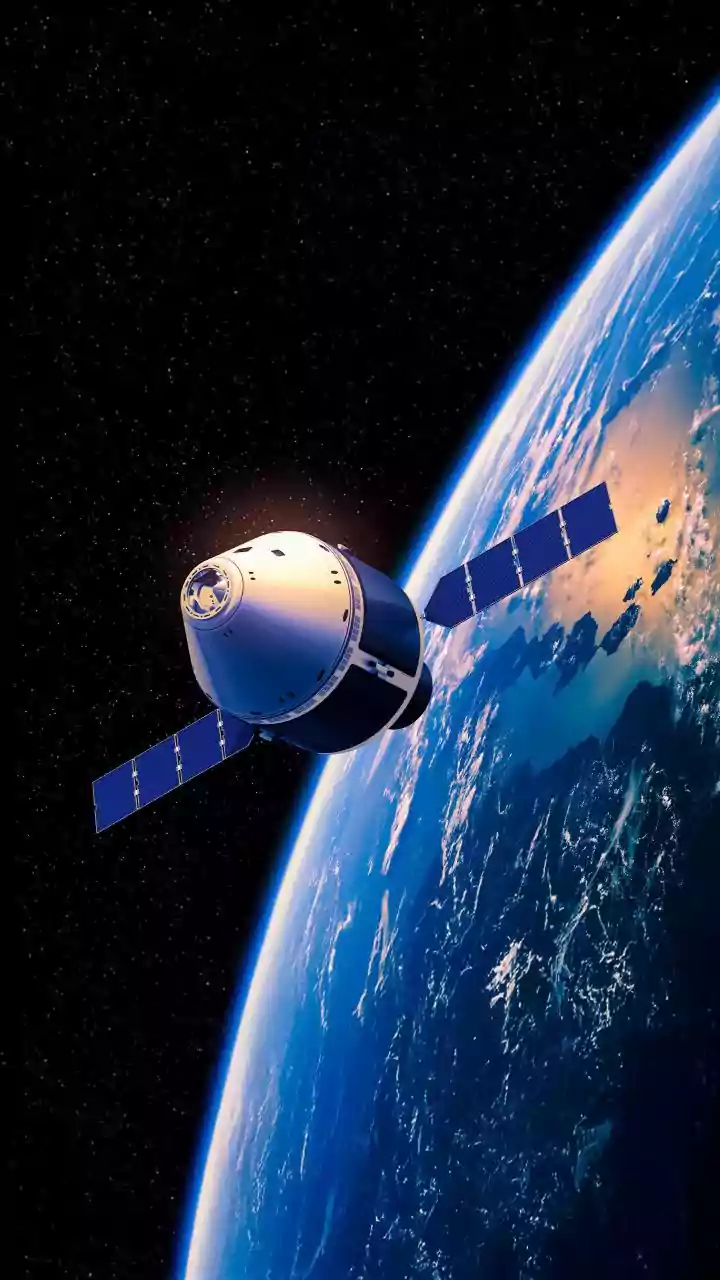
On July 14, 2026, Menon launched aboard the Roscosmos Soyuz MS-29 spacecraft from the Baikonur Cosmodrome in Kazakhstan, alongside Russian cosmonauts Pyotr Dubrov and Anna Kikina. Their destination is the International Space Station (ISS), a premier orbiting laboratory where they will live and work for approximately eight months as members of Expeditions 74 and 75. This long-duration mission is a crucial platform for scientists to understand the challenges of keeping humans healthy in space, a key requirement for future deep-space exploration, including missions to the Moon and Mars. The ISS has been continuously inhabited since 2000, serving as a hub for international collaboration in science and technology.
A Laboratory in Orbit
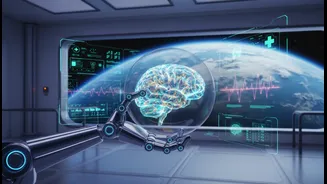
The primary focus of Menon's eight-month stay is to conduct a series of sophisticated scientific experiments. Given his background as a physician, much of his research will center on human physiology. Key studies will investigate the effects of microgravity on the human body, including changes in blood flow, muscle atrophy, and bone density. One critical experiment involves testing technology to produce intravenous (IV) fluids from the station’s existing water supply, a capability that would be essential for treating medical emergencies on long voyages without resupply from Earth. He will also use ultrasound guided by artificial intelligence, a technique that could allow astronauts to perform complex medical diagnostics autonomously.
Advancing Technology for Earth and Space
Beyond human health, Menon's research has implications for technology. He will continue experiments on the in-space manufacturing of semiconductor crystals. The unique microgravity environment allows for the creation of more perfect crystals than is possible on Earth, which could lead to breakthroughs in high-performance computers and advanced medical devices. The research conducted on the ISS often yields dual benefits, advancing our capacity for space exploration while simultaneously driving innovations that improve life on our home planet. From developing new medical treatments to creating novel materials, the orbiting laboratory is a powerful engine for discovery.
A Milestone of Collaboration
Menon’s mission on a Russian Soyuz spacecraft highlights the enduring international cooperation that underpins the ISS program, bringing together space agencies from the U.S., Russia, Europe, Japan, and Canada. For Indian audiences, his journey is a moment of immense pride. His father hails from Kerala, and Menon himself spent a year in India contributing to public health. His flight symbolizes the incredible contributions of the Indian diaspora in the highest echelons of science and exploration. As India continues to advance its own space ambitions, including the Gaganyaan human spaceflight program, Menon's mission serves as a powerful source of inspiration for a new generation of scientists, engineers, and dreamers.