


The Science of Hair Penetration
To understand why coconut oil is unique, we first need to look at the structure of hair. Each strand has an outer layer called the cuticle and an inner core called the cortex, which is made of protein. Many oils simply coat the outside of the cuticle,
providing a temporary smoothing effect. Penetrating oils, however, are different. They have molecules small enough to slip past the cuticle and travel into the cortex. This is where they can work from the inside out, offering more than just surface-level shine. This ability is largely determined by the oil's molecular weight and the type of fatty acids it contains.
Coconut Oil's Secret Weapon: Lauric Acid
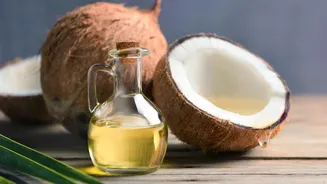
The hero ingredient in coconut oil is lauric acid, a medium-chain fatty acid that makes up about half of its composition. Lauric acid has a low molecular weight and a straight, linear structure. This unique shape allows it to be more easily absorbed deep into the hair shaft compared to other, bulkier fatty acids found in different oils. Scientific studies have shown that because of this high affinity for hair proteins and its ability to penetrate, coconut oil can remarkably reduce the protein loss that hair experiences during washing and styling. This protection works on both healthy and damaged hair, making it a powerful tool for maintaining hair integrity.
Understanding Surface-Only Oils
Oils that don't penetrate the hair shaft are known as 'sealing' or 'occlusive' oils. Common examples include mineral oil and, to a lesser extent, sunflower oil. These oils have larger molecules that can't get into the cortex, so they sit on top of the hair strand. Their job is to form a protective film that coats the cuticle. This is useful for locking in moisture that is already present in the hair, reducing frizz, and adding a glossy finish. While they don't strengthen the hair's core protein structure, they are effective at protecting the hair from the outside and improving its appearance.
Penetrating vs. Sealing: Which Is Better?
It’s not a question of one being 'better' than the other; they simply do different jobs. A penetrating oil like coconut oil is ideal for deep conditioning and fortifying the hair from within. Its ability to prevent protein loss helps make hair more resilient to damage from washing, heat, and chemical treatments. Sealing oils are best used as a finishing touch. After hydrating your hair with water or a leave-in conditioner, a sealing oil can lock that moisture in, keeping your hair soft and manageable for longer. For a complete routine, many people benefit from using both types of oils at different stages of their hair care.
How to Use Coconut Oil Effectively
To get the most out of coconut oil's penetrating properties, it's best used as a pre-shampoo treatment. Applying it to dry or damp hair for at least 30 minutes before washing gives the lauric acid enough time to travel into the hair shaft and protect the proteins from being stripped away by shampoo and water. Warm the oil slightly between your palms and work it through your mid-lengths and ends, which are typically the most damaged parts of your hair. Be mindful of quantity; a little goes a long way. While incredibly beneficial for many, those with very fine or low-porosity hair might find it heavy, so it’s always wise to start with a small amount to see how your hair responds.