

What the 2027 Trials Entail
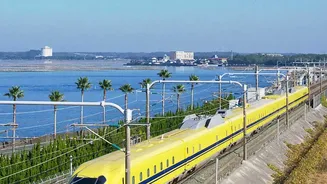
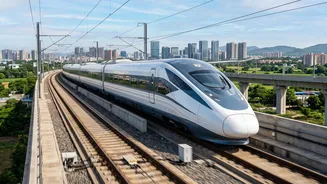
The upcoming trials, announced by railway officials for mid-2027, represent the first time a high-speed train will run on Indian soil at operational speeds. These tests will not cover the entire 508-kilometre corridor at once. Instead, they will be conducted
on the most advanced section of the project, likely the stretch between Surat and Bilimora in Gujarat. Engineers will test critical systems including track stability, overhead electrification, signalling, and the performance of the trainsets themselves under real-world conditions. According to officials, a successful trial period of two to four months could see the first commercial service launching on this segment as early as August 2027. This phased approach allows the National High Speed Rail Corporation Limited (NHSRCL) to validate the technology and operational procedures before extending the service across the entire route.
A Project Forged Through Challenges
The journey to this point has been a marathon, not a sprint. Since its foundation stone was laid in 2017, the project has navigated a complex landscape of hurdles that have pushed its timelines and budget. The most significant challenge was land acquisition, especially in Maharashtra, which caused initial delays. While 100% of the required land has now been acquired across Gujarat, Maharashtra, and Dadra and Nagar Haveli, the delays contributed to a major cost escalation. The project's estimated cost has nearly doubled from its original Rs 1.1 lakh crore to approximately Rs 2.1 lakh crore. This increase has been attributed to the acquisition delays, procurement challenges, and general inflation over the extended project timeline. Despite these obstacles, construction has gained significant momentum in recent years.
Construction at Full Throttle
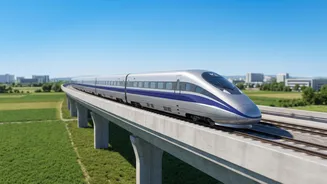
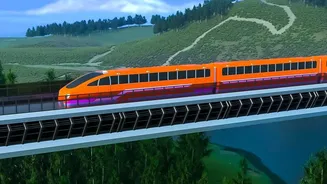
Today, work on the corridor is progressing at a remarkable pace. In Gujarat, viaducts (the elevated structures the train runs on) have been erected over long distances, and the state's stations, such as the diamond-inspired hub in Surat, are nearing completion. In Maharashtra, where progress was once slower, construction is now in full swing. This includes building complex infrastructure like mountain tunnels, viaducts across creeks, and major river bridges, including a 2.32 km bridge over the Vaitarna River. One of the project's most impressive engineering feats will be the 7-km undersea tunnel in Maharashtra, a first for the Indian Railways. The rapid progress across both states is what makes the 2027 trial date a tangible and achievable target.
The Bigger Picture: More Than Just Speed
When fully operational, the bullet train will slash travel time between Mumbai and Ahmedabad to just under two hours for limited-stop services, a journey that currently takes six to eight hours by conventional rail. This dramatic reduction in travel time is expected to have a profound economic impact, fostering closer integration between two of India's most important business hubs. Beyond the immediate corridor, the project serves a larger national purpose. It is acting as a blueprint for a future network of high-speed rail lines across the country, with seven more corridors already identified for development. The experience gained in engineering, construction, and operations is creating a standardised model that aims to make future projects faster and more cost-effective to implement. Furthermore, the project is a significant driver for the 'Make in India' initiative, with indigenous high-speed trainsets also under development.