


Listening to the Ocean's Depths
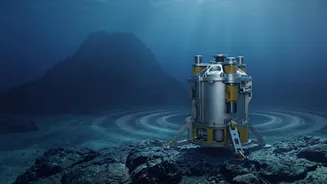
Scientists are turning to the ocean's acoustic environment for clues about impending disasters. The focus is on hydrophones—essentially underwater microphones—that can pick up sounds travelling vast distances through the water. Recent analysis of the 2022
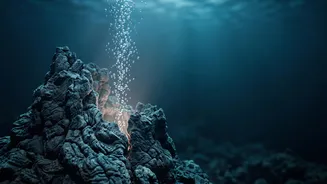
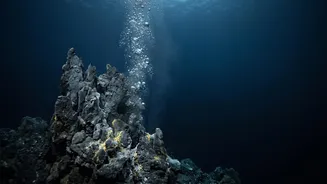
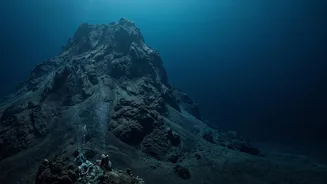
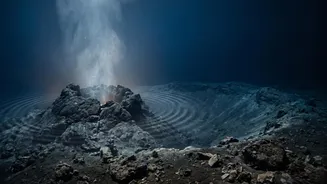
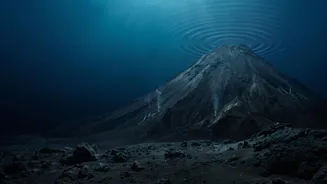
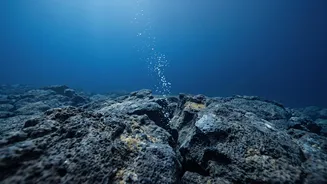
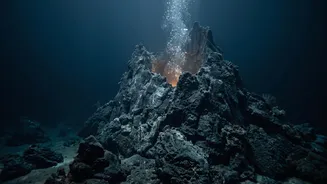
Hunga volcano eruption in Tonga has been a game-changer. Researchers discovered that the most destructive tsunami was not caused by the initial explosion, but by the subsequent collapse of the volcano's caldera about an hour later. This collapse produced a massive and distinct underwater sound, a 'boom' that was detectable thousands of kilometres away. This finding has opened the door to a new method of tsunami detection, one based on listening for the specific acoustic signatures of tsunami-generating events.
The Science of Sound vs. Water
The key advantage of this method lies in simple physics: sound travels much faster through water than a tsunami wave does. An acoustic signal from a volcanic collapse moves through the ocean at about 1.5 kilometres per second. In contrast, a tsunami wave travels at a speed closer to that of a jetliner, but this is still more than seven times slower than the sound that heralded its creation. This significant time difference creates a crucial window for early warnings. The sounds travel efficiently through a specific layer in the ocean known as the SOFAR (Sound Fixing and Ranging) channel, where temperature and pressure conditions allow low-frequency sound waves to propagate for enormous distances with little loss of energy. By placing hydrophones in this channel, scientists can effectively eavesdrop on distant underwater events.
An Edge Over Existing Systems
Current tsunami warning systems primarily rely on two components: seismic sensors that detect earthquakes and a network of DART (Deep-ocean Assessment and Reporting of Tsunamis) buoys. Seismometers are excellent at detecting earthquakes, but not every earthquake generates a tsunami, leading to a high rate of false alarms. DART buoys are highly effective, using bottom pressure recorders to confirm if a tsunami has actually been formed, but they only detect the wave when it passes their location. Acoustic monitoring offers a complementary approach. It can provide a faster assessment, especially for non-seismic tsunamis generated by landslides or volcanic collapses, which traditional systems struggle to assess accurately. By analysing the sound, scientists can potentially determine the nature and scale of the event almost as it happens.
Challenges and the Path Forward
While promising, the technology is still in development. A major challenge is the limited number of hydroacoustic stations currently in operation. The Comprehensive Nuclear-Test-Ban Treaty Organization (CTBTO) operates a global network of 11 hydrophone stations, but experts suggest a network of around two dozen strategically placed stations would be needed for true global coverage. Another task is to build a robust system that can automatically and accurately distinguish the specific acoustic signature of a caldera collapse or submarine landslide from the general cacophony of the ocean. This involves refining algorithms and potentially using artificial intelligence to analyse the sound data in real-time, reducing the time from detection to warning to mere minutes.
Implications for India's Coastline
For a country with a vast coastline like India, which is vulnerable to tsunamis from seismic zones like the Andaman-Sumatra trench, this research holds significant promise. India operates a robust Tsunami Early Warning System, established after the devastating 2004 event, which primarily uses seismic data and a network of tide gauges and buoys. Integrating hydroacoustic monitoring could add another layer of security, providing faster validation and potentially life-saving minutes in the event of a tsunami generated by a non-earthquake source. While the research is focused on volcanic collapses in the Pacific, the principles are applicable to other regions, including the Indian Ocean. It represents a shift towards a multi-pronged approach where sound, seismic data, and sea-level measurements work in concert to create a more resilient and reliable warning system.