




The Global Crisis of Coral Bleaching
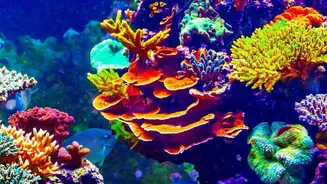
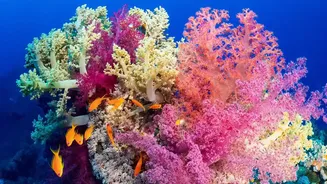
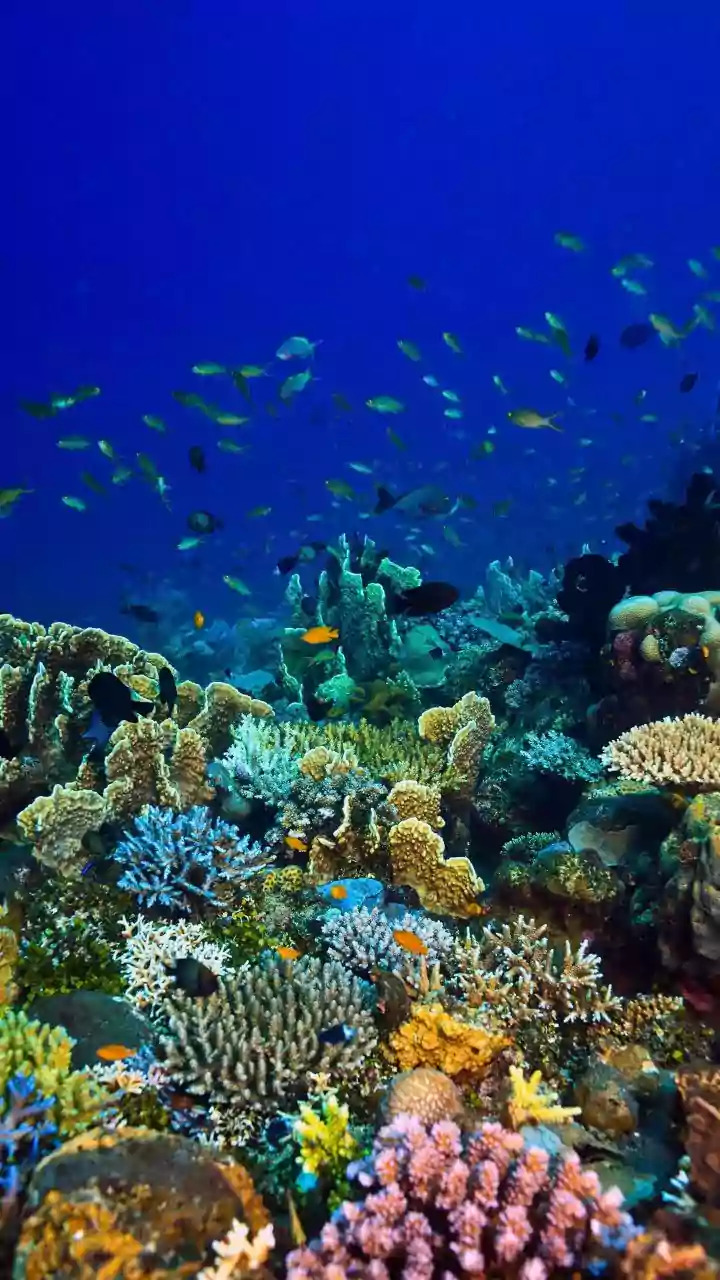
Coral reefs, often called the 'rainforests of the sea', are some of the most diverse ecosystems on Earth. This vibrancy comes from a crucial partnership. Corals are tiny animals that host microscopic algae called zooxanthellae in their tissues. This relationship
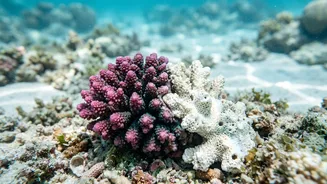
is symbiotic: the algae get a protected home and compounds needed for photosynthesis, and in return, they provide the coral with up to 90% of its food. This energy allows corals to grow, reproduce, and build the massive calcium carbonate structures that form reefs. But when ocean temperatures rise, even by just a degree or two, this partnership breaks down. The stressed coral expels its algae, losing its primary food source and its colour. This is coral bleaching. Without the algae, the coral turns a ghostly white and begins to starve.
A Discovery Sparked by Accident
In the face of widespread bleaching, scientists are urgently searching for solutions. A recent study from Stanford University, published in 'Science Advances', has revealed a fascinating and previously unknown recovery mechanism. The discovery happened by chance in a lab tank in 2025 when a researcher noticed that a bleached coral fragment that had fallen against a healthy one was beginning to regain its colour where the two touched. This observation sparked a formal experiment. Researchers placed bleached coral fragments in direct contact with healthy fragments from the same original colony. The results were astounding.
How 'Healthy Contact' Heals
The study confirmed that when a healthy and a bleached coral from the same genetic clone touch, their tissues can fuse. This fusion creates microscopic channels, forming a 'nutrient highway' between the two. Through this connection, the healthy coral transfers its vital symbiotic algae to its struggling neighbour. Once transferred, these algae multiply at an incredible rate—up to ten times faster than during natural recovery in the wild. Every single bleached coral that was in direct contact with a healthy clone made a full recovery, some in as little as four weeks. In contrast, bleached corals that were kept just millimetres away, without direct contact, did not recover and eventually died.
A Jump-Start to Recovery
Even more promising is that the contact doesn't need to be permanent. The research showed that just five to seven days of contact was enough to transfer sufficient algae to kickstart the healing process. After this brief interaction, the previously bleached coral could be separated and would continue to recover fully on its own. This indicates that the recovery is driven by the rapid replication of the newly acquired algae within the coral's own tissue, not a continuous supply from the healthy donor. The process, however, only works between genetically identical corals. When fragments from different colonies were placed together, they displayed an immune response, essentially fighting each each other instead of helping.
Implications for India's Reefs
While this technique is not a scalable solution for entire reefs like the Great Barrier Reef, it offers a powerful new tool for targeted restoration efforts. For India, which has significant coral formations in the Gulf of Mannar, Gulf of Kutch, Andaman and Nicobar Islands, and Lakshadweep, this research is highly relevant. These areas have also faced bleaching events. Restoration projects are already underway in places like the Gulf of Mannar, using coral transplantation onto artificial structures. The knowledge that genetically identical corals can rapidly heal each other could inform these 'coral gardening' strategies, potentially accelerating the recovery of damaged sections of these vital national treasures.