

Celeriac: The Gnarly All-Rounder
Don’t be deterred by its knobby, alien-like appearance. Celeriac, also known as celery root, is a culinary gem with a surprisingly refined flavour. Once peeled, its crisp, creamy-white flesh offers a delicate taste that is a cross between celery and parsley,
with a nutty undertone. It’s far less starchy than a potato, making it a fantastic lighter alternative. For an easy introduction, try roasting it. Simply peel and chop the celeriac into cubes, toss with olive oil, salt, and pepper, and roast at 400°F (200°C) for about 30-40 minutes until tender and caramelized. It also makes a wonderfully creamy and low-carb mash; just boil until tender and prepare as you would with potatoes. For a refreshing twist, try it raw, julienned into a classic French remoulade.
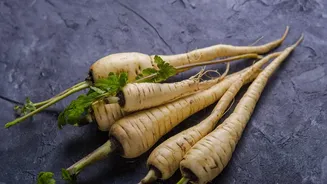
Parsnips: The Sweet and Earthy Classic
Often seen as the carrot's paler cousin, the parsnip deserves its own moment in the spotlight. This native British root is prized for its distinctly sweet, nutty, and earthy flavour, which intensifies when roasted. Roasting brings out its natural sugars, creating a beautifully caramelized exterior. For a simple side dish, peel and chop parsnips, toss with a little oil and salt, and roast at 400°F (200°C) for 25-35 minutes until golden and tender. They are also a wonderful addition to soups and stews, providing a creamy texture and deep flavour. For a change from potato latkes, try making parsnip and potato fritters, or even air-fry them into chips for a healthier snack.
Jicama: The Crunchy, Refreshing Surprise
If you’re looking for crunch, look no further than jicama. Native to Mexico, this round, brown-skinned root vegetable has a crisp, juicy white flesh that is incredibly refreshing. The flavour is subtly sweet and nutty, often described as a cross between a water chestnut and a savory apple. Unlike potatoes, jicama is most commonly enjoyed raw. Its mild flavour and incredible crunch make it a perfect addition to salads, slaws, and as a vehicle for dips. For a traditional Mexican snack, slice jicama into sticks and serve with a squeeze of lime juice and a sprinkle of chili powder. While it shines when raw, jicama can also be cooked. It holds its texture well in stir-fries, adding a pleasant crunch to the dish.
Taro Root: The Nutty Global Staple
A staple in cuisines across Asia, Africa, and the Caribbean, taro root is a starchy vegetable that boasts a flavour far more interesting than a potato. It has a nutty, slightly sweet taste and a texture that can range from creamy to firm depending on how it's prepared. It's important to note that taro must be cooked, as it is toxic when raw. You can treat it much like a potato: boil and mash it, fry it into chips, or add it to curries and stews. A popular Indian preparation involves boiling the taro, slicing it, and then pan-frying it with spices like cumin, turmeric, and garam masala. Its ability to absorb flavours makes it a versatile ingredient in a wide array of savory dishes.
Salsify: The Forgotten Delicacy
Once popular in Victorian times, salsify is a long, tapered root that is overdue for a comeback. Sometimes called the “oyster plant,” its flavour is delicate and complex, often compared to artichoke hearts, asparagus, or even oysters, with a hint of parsnip. Before cooking, the root should be peeled and placed in water with a bit of lemon juice to prevent it from browning. Salsify can be boiled and mashed with cream and butter for an elegant puree, or roasted with herbs and garlic. For a simple yet delicious preparation, try braising it. Steam the peeled root until tender, then sauté it in a pan with olive oil until golden, finishing with a toss of maple syrup and walnuts.