

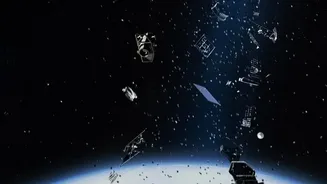
The Junkyard Above Our Heads
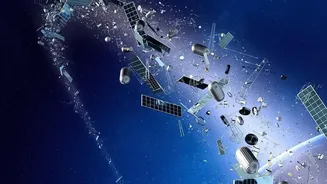
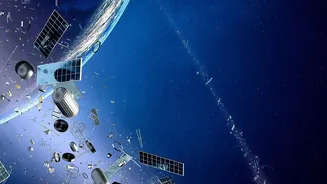
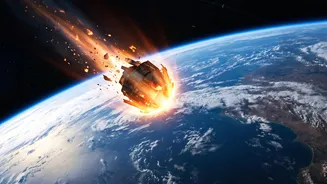
For decades, humanity has been sending rockets and satellites into orbit. While many are still operational, thousands are now defunct, joining spent rocket stages and fragments from past collisions. This collection of man-made objects is known as space
debris. According to the European Space Agency (ESA), there are millions of pieces of debris in orbit, with an estimated total mass of over 11,000 tonnes. Even a fragment just one centimetre in size, travelling at orbital speeds of several kilometres per second, can strike an operational satellite with enough force to cause catastrophic damage. This creates a significant threat to the satellite infrastructure that powers everything from GPS navigation and weather forecasting to global communications and financial transactions.
A Sky Full of Satellites
The problem is getting worse at an accelerated rate. The rise of commercial 'mega-constellations' from companies like SpaceX's Starlink and OneWeb is dramatically increasing the number of objects in low-Earth orbit (LEO). As of late 2026, there are over 16,000 active satellites in orbit, a number that has grown six-fold in just six years, with Starlink alone accounting for roughly two-thirds of the total. This surge in satellite traffic significantly increases the chances of collision, not just with existing debris but between active satellites themselves. Experts warn of a potential 'Kessler Syndrome', a theoretical cascade where one collision generates debris that triggers a chain reaction of more collisions, potentially rendering certain orbits unusable for generations. This rising risk is the primary driver behind the urgent need for solutions.
Enter the Space Janitors
Where there is risk, there is also opportunity. A dedicated market for space debris monitoring and removal is rapidly taking shape. Market analyses value the combined sector at over $1.2 billion in 2025-2026, with projections to reach nearly $2 billion by 2030 and potentially $2.7 billion by 2032. The growth is driven by satellite operators needing to protect their multi-million dollar assets, governments seeking to ensure long-term space sustainability, and insurance companies pricing in collision risk. While monitoring and tracking services currently make up the bulk of the market, the active debris removal (ADR) segment is forecast to grow exponentially, with some reports predicting a compound annual growth rate of over 38%.
The Tech Behind the Cleanup
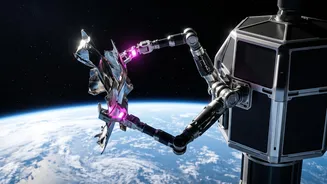
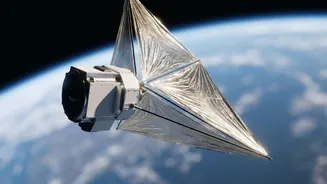
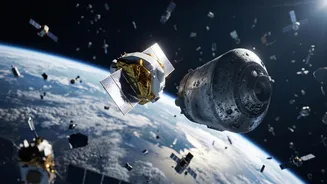
Several pioneering companies are developing innovative technologies to act as orbital cleanup crews. Japan's Astroscale and Switzerland's ClearSpace are two of the most prominent players, backed by contracts from space agencies like JAXA, ESA, and the UK Space Agency. Their proposed solutions sound like science fiction: robotic arms to grab and deorbit defunct satellites, powerful magnets to dock with specially prepared spacecraft, and even nets or harpoons to capture uncooperative targets. For instance, Astroscale's ELSA-M mission aims to demonstrate capturing a retired satellite and pulling it into the atmosphere to burn up. ClearSpace is preparing a mission to remove an old ESA satellite using a four-armed robotic 'claw'. These missions are crucial for proving the technical and commercial viability of active debris removal.
Challenges on the Final Frontier
Despite the technological progress, the path to a clean orbit is filled with hurdles. ADR missions are incredibly complex and expensive, with the cost to remove a single object currently estimated in the tens of millions of dollars. Beyond the technical difficulty of capturing a tumbling object moving at high speed, there are significant legal and regulatory questions. Issues of ownership and liability are thorny; who is responsible if a removal mission goes wrong and creates even more debris? Establishing clear international laws and a framework for space traffic management is crucial for the industry to operate safely and effectively. Without clear 'rules of the road', the risk and cost of these vital cleanup operations remain prohibitively high for widespread commercial deployment.