



Why Vegetables Alone Aren't Enough
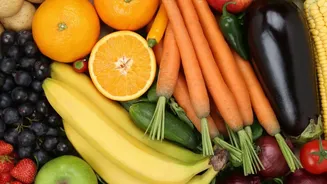
Vegetables are nutritional powerhouses, packed with vitamins, minerals, and some fibre. However, they are also very low in calories, protein, and fat. Satiety, the feeling of fullness and satisfaction after a meal, is a complex process governed by hormones
and how long food stays in your stomach. While the volume of vegetables can make you feel full initially, the lack of dense nutrients means your body processes them quickly, triggering hunger signals again sooner than you'd like. A diet based solely on non-starchy vegetables can leave you feeling deprived and constantly thinking about your next meal.
The Power of Protein
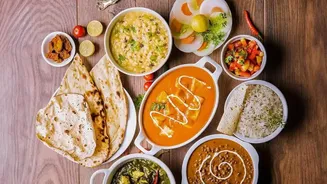
Protein is widely considered the most satiating macronutrient. It takes longer for your body to digest compared to carbohydrates, which means it stays in your stomach longer, promoting a sustained feeling of fullness. Protein also helps build and repair tissues, including muscle, and plays a role in regulating appetite-related hormones. For a vegetarian diet to be truly satisfying, incorporating a rich protein source at every meal is essential. Excellent vegetarian options include lentils (dal), chickpeas, beans (rajma), tofu, paneer, and edamame. Even quinoa is a complete protein, containing all essential amino acids.
Don't Forget Healthy Fats
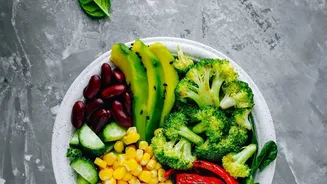
Fat often gets a bad reputation, but healthy, unsaturated fats are crucial for a balanced diet and for feeling full. Fat slows down gastric emptying, which is the speed at which food leaves your stomach. This delay means you feel satisfied for a longer period after your meal. Furthermore, fats contribute to the taste and texture of food, making meals more enjoyable and psychologically satisfying. Great vegetarian sources of healthy fats include avocados, nuts like almonds and walnuts, seeds such as chia, flax, and pumpkin seeds, and oils like olive and rapeseed oil. A sprinkle of seeds on your salad or a slice of avocado with your meal can make a significant difference.
Embrace Fibre and Complex Carbs
Fibre is another key player in the satiety game. There are two types: soluble and insoluble. Soluble fibre, found in oats, beans, apples, and lentils, forms a gel-like substance in your digestive tract, slowing digestion and helping to control blood sugar levels. Insoluble fibre, found in whole grains and vegetables, adds bulk to your stool and keeps things moving. Together, they contribute to a feeling of fullness. Combining fibre with complex carbohydrates like brown rice, whole-wheat bread, and starchy vegetables provides a slow and steady release of energy, preventing the energy spikes and crashes associated with refined carbs, and keeping you powered for hours.
Putting It All Together: A Balanced Plate
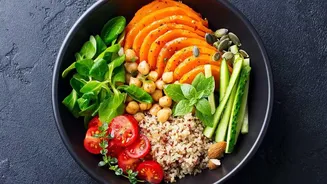
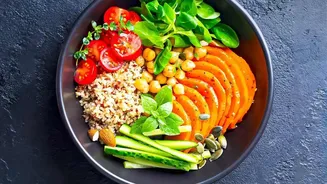
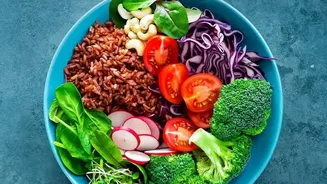
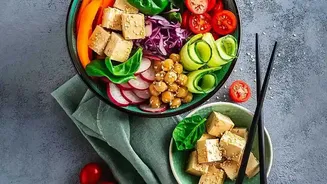
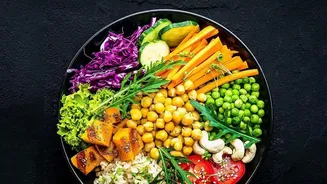
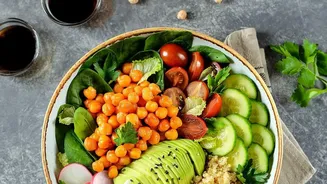
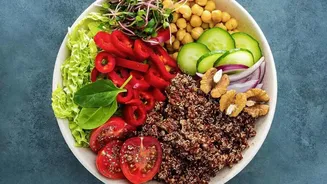
The most effective way to build a filling vegetarian meal is to use the plate method. Imagine your plate divided into sections. Aim to fill half of your plate with non-starchy vegetables, providing vitamins and minerals. One-quarter of your plate should be dedicated to a high-quality protein source, like a bowl of dal, a block of paneer, or a serving of tofu. The final quarter should be filled with complex carbohydrates or starchy vegetables, such as a serving of brown rice, quinoa, or a whole-wheat chapati. To complete the meal, add a serving of healthy fats—perhaps by cooking the vegetables in olive oil or adding a handful of nuts. This combination ensures you get the volume from the vegetables, the long-lasting energy from the carbs, and the powerful satiety from protein and fat.