






The Original Vision
In the late 1960s, Bruce McLaren was not just a champion driver; he was a visionary engineer. His team was utterly dominant in the Can-Am racing series with the mighty M6A. Flushed with track success, Bruce harboured a grander ambition: to build the fastest,
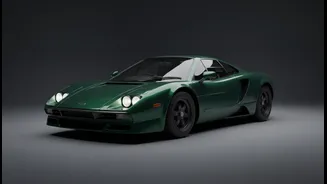
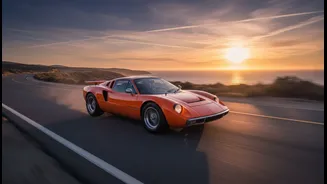
best-handling road car in the world. The plan was to create a road-going coupe version of the M6A racer, dubbed the M6GT. It was a radical concept for the era, essentially a race car for the street, featuring a lightweight chassis, a powerful mid-mounted Chevrolet V8 engine, and those now-iconic butterfly doors. Bruce was so personally invested that he used the initial red prototype, registered 'OBH 500H', as his daily driver, commuting to work and race meetings in the very supercar he hoped to sell to the public.
A Dream Cut Short
The M6GT project was ambitious. The goal was to build at least 50 cars to homologate the design for Group 4 sports car racing. However, the dream came to a sudden, tragic end. On June 2, 1970, Bruce McLaren was killed while testing a new Can-Am car at the Goodwood Circuit. He was just 32 years old. Without its passionate leader and driving force, the company shelved the M6GT road car project. Only a tiny handful of prototypes were ever completed, and the M6GT became one of motorsport’s greatest ‘what if’ stories. The concepts of a lightweight, race-bred supercar would lay dormant within McLaren for over two decades, eventually resurfacing in the legendary McLaren F1 of the 1990s.
A Modern Resurrection
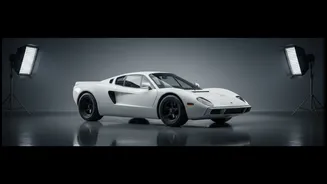
For more than 50 years, the M6GT remained a footnote in McLaren's history. But now, McLaren's own bespoke division, McLaren Special Operations (MSO), has finally finished the job its founder started. Unveiled in July 2026, a new M6GT has been built from the ground up, not as a modern interpretation, but as an authentic recreation of the original vision. This one-off project, officially titled 'M6GT: Restored by MSO', began with a period-built M6A race car chassis. The team then discovered the original body moulds, which had been sitting in storage in the U.K., and used them to recreate the car's stunning shape.
Authenticity Over Modernity
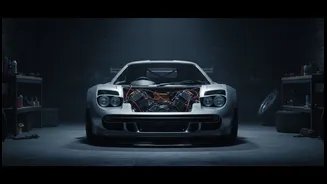
The MSO team was obsessive about historical accuracy. Rather than fitting the car with modern technology, they sourced a period-correct Chevrolet small-block V8 and a five-speed manual gearbox. The suspension is original M6GT hardware, painstakingly restored, which required tracking down hard-to-find imperial-era bearings. Craftspeople from the aerospace industry were even brought in to install the authentic aluminium dome rivets. The car is finished in a bespoke 'Colnbrook White', named for the town where Bruce McLaren first developed his road car concepts. The green vinyl interior and hand-turned walnut gear knob are further nods to the original car and the era from which it was born. According to MSO, even evidence of modifications made to the body moulds during the original development were preserved as part of the car's history.
A 60-Year-Old Newborn
The finished car made its public debut at the 2026 Goodwood Festival of Speed, poignantly held at the same circuit where Bruce McLaren lost his life. This M6GT is more than just a restoration; it's the fulfilment of a promise and a direct link to the company's origins. It represents the very beginning of the McLaren road car story, a chapter that was written in the late 1960s but is only being read today. It serves as a tribute to Bruce McLaren's ambition, showcasing that his desire to push the boundaries of performance from the racetrack to the road was there from the very start. The car is not for sale; instead, it will be the cornerstone of a new Heritage Collection, a living reminder of the dream that started it all.