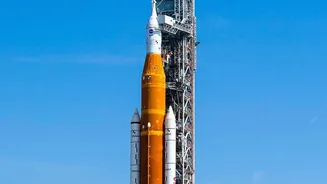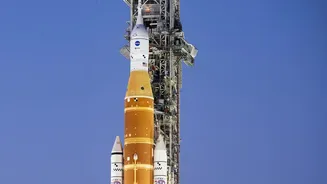








The headline might sound like a step backward, but NASA's decision to keep Artemis III close to home is a calculated move. This isn't a retreat; it’s a crucial dress rehearsal ensuring the next giant leap—the Artemis IV lunar landing—is safe.
A Major Mission Shift
For years,
Artemis III was slated to be the historic mission that would return astronauts to the lunar surface for the first time since the Apollo era. However, in a significant strategy shift announced in early 2026, NASA repurposed the mission. Now, Artemis III, scheduled for mid-2027, will operate exclusively in low Earth orbit. This change wasn't made lightly. Instead of a lunar landing, the mission is now a complex, 14-day demonstration designed to test the very hardware that will make future Moon landings possible. The first landing is now tasked to Artemis IV, which is targeting an early 2028 launch. This deliberate reordering is a masterclass in risk management, prioritizing safety and system validation above a race to the surface.
The Crucial Job of Artemis III
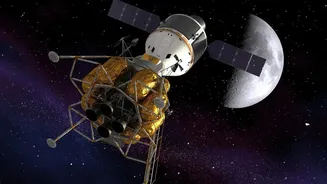
The primary goal of Artemis III is to be one of the most complex test missions NASA has ever attempted. It will involve three separate spacecraft launched on three different heavy-lift rockets. The Orion capsule, carrying four astronauts, will launch and then practice rendezvousing and docking with uncrewed 'test articles' of the human landing systems (HLS) being built by commercial partners SpaceX and Blue Origin. The crew will enter the Blue Origin lander test vehicle to assess its life-support systems, controls, and cabin environment firsthand. The docking test with SpaceX's Starship will be more limited, focusing only on the docking procedure itself. NASA has compared this mission to Apollo 9, which famously tested the Lunar Module in the safety of Earth orbit before it was trusted to fly to the Moon. Every procedure is designed to provide critical data and operational experience, reducing the risks for the crews that will actually descend to the lunar surface.
Artemis IV: The New Landing Mission
With the essential testing completed by Artemis III, Artemis IV will take on the mantle of humanity's return to the Moon. Scheduled for early 2028, this mission will mark the first crewed lunar landing since Apollo 17 in 1972. But it aims to do more than just leave footprints. Artemis IV is also a logistics and construction mission. A more powerful version of the Space Launch System rocket, the Block 1B, will carry both the Orion crew capsule and a new module for the Lunar Gateway, a small space station planned for orbit around the Moon. Astronauts will deliver and install the International Habitation Module (I-Hab), a critical component provided by the European Space Agency that expands the Gateway's living quarters. After that, two astronauts will descend to the lunar south pole, a region believed to hold water ice in permanently shadowed craters. This mission combines the historic return to the surface with the foundational work of building a sustainable, long-term orbital outpost.
Gateway: The Long-Term Strategy
The different goals of Artemis III and IV highlight NASA's shift toward long term lunar habitation. Artemis III is about validating the landers, while Artemis IV is about using a lander and simultaneously building out the Gateway. The Gateway is the cornerstone of this long term vision. It's a multinational collaboration designed to serve as a command center, science lab, and staging point for missions to the lunar surface and, eventually, to Mars. By orbiting the Moon, it provides a permanent base of operations, unlike the Apollo missions which were self contained trips. Artemis IV's task of delivering the I Hab module is the first step in making the Gateway a true home and workplace for astronauts in deep space. This orbital outpost makes future landings more efficient and less dependent on a single, massive launch from Earth for every mission.