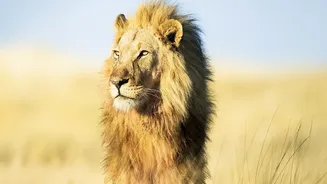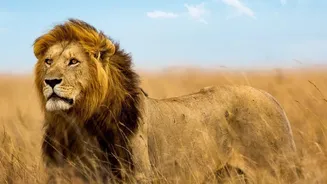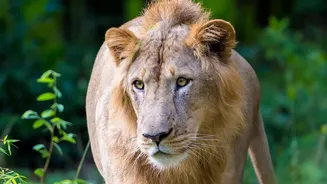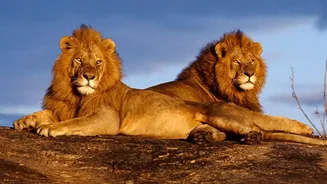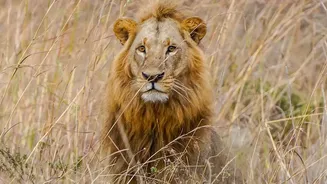








For decades, the Asiatic lion has been synonymous with one place: Gir National Park. But as this conservation success story unfolds, a new location is entering the spotlight. Barda Wildlife Sanctuary is quietly becoming a crucial second home for these
majestic cats.
A Victim of Its Own Success
The conservation of the Asiatic lion is one of India's proudest achievements. From a population on the brink of extinction a century ago, their numbers have rebounded significantly, with the 2025 census recording 891 lions in Gujarat. This success, however, has created a new challenge: overcrowding. Gir National Park, the sole home for the entire wild population for decades, has a finite carrying capacity. With lions being highly territorial, a dense population in one area increases the risk of infighting, genetic bottlenecks, and vulnerability to disease outbreaks. A single epidemic, like the one that killed 28 lions in 2018, could be catastrophic for a species confined to one location. This has made the establishment of a second, geographically separate population not just a good idea, but an ecological necessity.
Enter Barda: A Home of the Past and Future
Located about 100 kilometres from Gir, the Barda Wildlife Sanctuary is emerging as the leading candidate for this vital role. Spread across more than 192 square kilometres of rugged hills and deciduous forests in the Porbandar and Devbhumi Dwarka districts, Barda is not an entirely new habitat for lions. Historically, lions roamed these lands until they were locally extinct in 1879. In a landmark moment in January 2023, a male lion naturally dispersed from the greater Gir region and recolonised Barda on his own, a journey of over 140 years. This natural migration confirmed what conservationists had long suspected: Barda is a viable and attractive habitat, connected to Gir through natural corridors.
Preparing the Sanctuary
The 'Project Lion @ 2047' initiative has formally identified Barda as the second home for Asiatic lions, triggering a series of focused efforts to prepare the sanctuary. A crucial step has been augmenting the prey base. While lions were found to be feeding on wild pigs and domestic cattle, a sustainable population needs more diverse prey. To address this, hundreds of spotted deer (chital) and sambar have been translocated and bred within Barda to build a robust herbivore population. Furthermore, habitat improvement works, such as grassland development and removing invasive species, have been undertaken to enhance the quality of the ecosystem. Recent studies have confirmed that the sanctuary's habitat, prey resources, and ecological conditions are suitable for supporting a long-term lion population.
A New Population Takes Root
Following the arrival of the lone male, the Gujarat Forest Department augmented the budding population by introducing five females. This group has not only adapted but thrived. As of late 2026, Barda is home to a pride of 17 lions, including six adults and their eleven cubs. Researchers have been closely monitoring the lions, using radio collars to study their movements, social structures, and habitat preferences. The findings show that the lions are actively using the sanctuary's forests and grasslands, establishing distinct home ranges and behaving as a natural, self-sustaining pride. This successful establishment marks a pivotal moment, transforming Barda from a potential habitat into a living, breathing 'Satellite Population 8' under Project Lion.
The Path Forward
To ensure the long-term success of Barda as a lion sanctuary, the government is also addressing the human element. In October 2026, a voluntary relocation scheme was announced for the Maldhari pastoralist communities living within the sanctuary. Offering a compensation package, the scheme aims to free up the core area from human pressure, benefiting both the wildlife and the relocated families who gain access to better amenities. The development also includes plans for eco-tourism, including a new safari park, which will create livelihood opportunities for local communities and raise conservation awareness. By managing human-wildlife interactions proactively, the goal is to create a harmonious environment where both lions and people can flourish.