







The Art of Intentional Curation
The first step in transforming keepsakes into a collection is to shift your mindset from accidental accumulation to intentional display. A collection isn’t just a random assortment of items; it’s a visual story. Begin by gathering your treasures and identifying
a common thread. This theme could be a consistent color palette, a shared material like wood or glass, or a story about your travels. The goal is to create a cohesive group that feels purposeful. Don't feel obligated to display everything at once. Curating like a museum means highlighting your best pieces and rotating them seasonally to keep your displays feeling fresh and dynamic. This approach gives each item space to be appreciated and prevents your surfaces from feeling overwhelmed.
The Console: Your Home's Welcome Stage
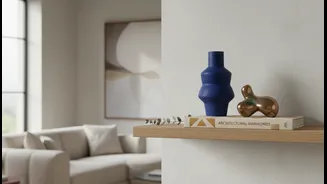
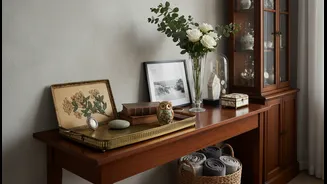
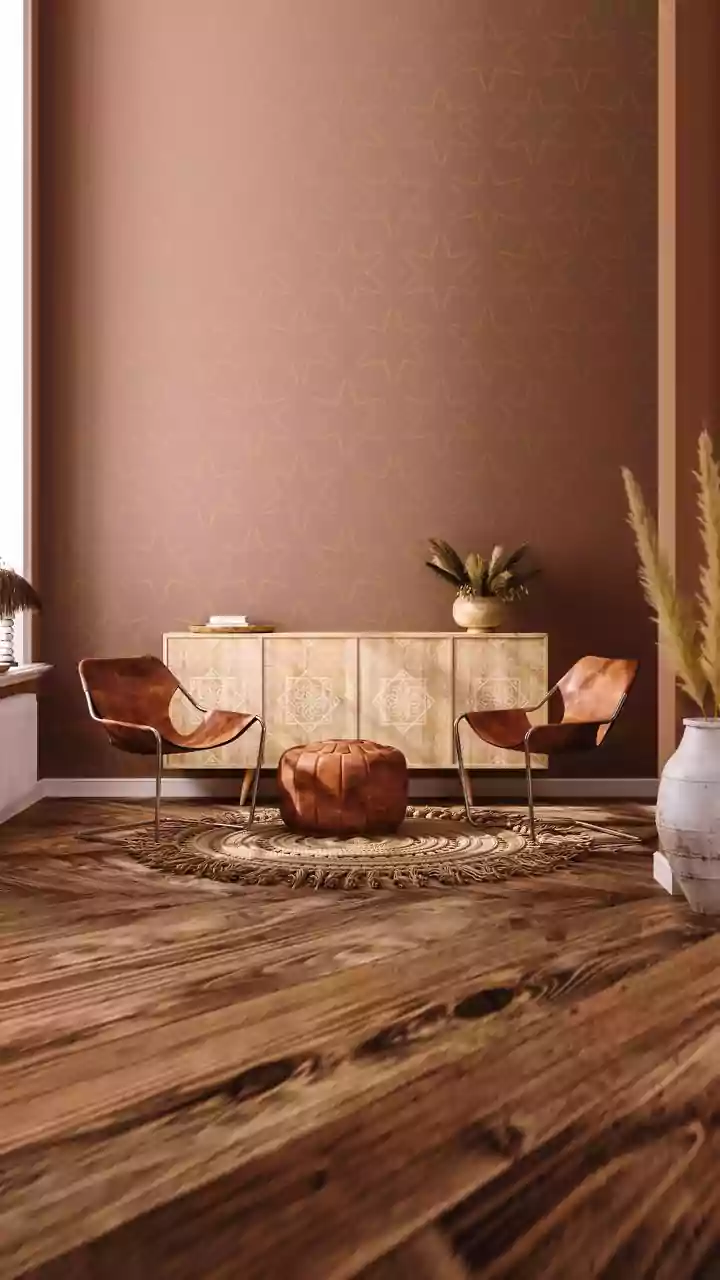
A console table, especially in an entryway or living room, is a prime stage for a collection. The key to a successful console display is layering and varying height. Start with a large anchor piece, such as a mirror or a significant piece of art, hung on the wall about 15 to 25cm above the table. This creates a focal point. On the tabletop, build your display by placing larger accessories first, like a lamp or a tall vase, to establish scale. Use stacks of books or decorative boxes to create pedestals for smaller objects, which adds visual rhythm. Intersperse personal items like framed photos or souvenirs, and soften the look with a touch of greenery. If your console has a lower shelf, use it for larger, visually heavy items like woven baskets or stacked books to ground the arrangement.
The Tray: A Tool for Tiny Collections
For smaller items that can easily look like clutter, a decorative tray is an essential tool. It acts as a frame, corralling disparate objects into a unified vignette. This technique works wonders on coffee tables, nightstands, and kitchen counters. A tray on a coffee table can neatly organize remotes, candles, and a small plant. On a bedside table, it can hold a book, glasses, and a small dish for jewelry. The trick is to group items in odd numbers, like threes or fives, which often feels more natural and visually appealing than symmetrical pairs. Play with varying heights within the tray—a small vase, a stack of coasters, and a decorative object can create a balanced and interesting display.
The Cabinet: A Showcase for Valued Treasures
A glass-fronted cabinet is the perfect place to protect and showcase fragile or extensive collections. Before you begin, empty the cabinet and give it a thorough cleaning. When arranging your items, start with the largest pieces to act as anchors for each shelf. Distribute items with similar colors or shapes throughout the cabinet to create a sense of balance and encourage the eye to move through the display. A common mistake is overcrowding; remember to leave 'breathing room' around your objects. This negative space allows each piece to stand out and prevents the display from looking chaotic. Mix textures, such as pairing smooth ceramic with rough wood, to add depth and tactile interest. Grouping smaller items together on one shelf or within a section can give them more visual weight.