






Finding a Basin Hiding in Plain Sight
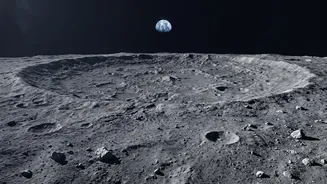
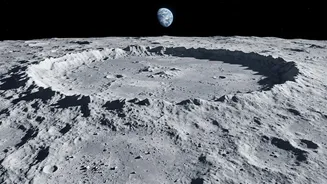
Scientists from the Physical Research Laboratory (PRL) in Ahmedabad have confirmed the existence of a vast, ancient impact structure in the Moon's southeastern hemisphere, naming it the Australe Basin. For decades, this feature eluded detection because
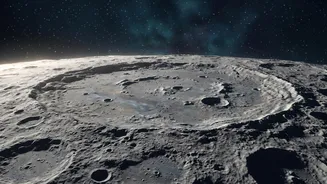
it is no longer visually obvious. Over billions of years, relentless bombardment from smaller asteroids and the constant churn of space weathering have completely eroded its towering crater rims, flattening it into the surrounding landscape. As a result, even advanced cameras and topographic maps that look for the classic 'bowl' shape of a crater couldn't see it. The basin was essentially a ghost, suspected to exist due to some geological quirks but impossible to confirm with conventional methods. This is where the unique capabilities of an instrument on board Chandrayaan-1 came into play, turning a long-standing hypothesis into a confirmed discovery.
Chandrayaan-1's Mineral Detective Work
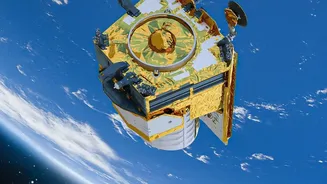
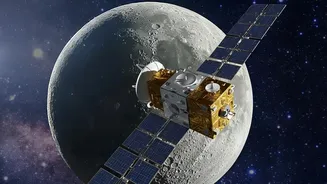
The key to uncovering the Australe Basin lay in data from the Moon Mineralogy Mapper (M3), a NASA-supplied imaging spectrometer that flew on ISRO's Chandrayaan-1 mission in 2008. Unlike a regular camera that sees visible light, M3 maps the surface by reading the chemical composition of the rocks and dust. Different minerals reflect sunlight in unique ways, creating a 'chemical fingerprint'. The PRL researchers, re-analysing this archival data, spotted a massive, circular ring of a specific mineral called orthopyroxene. This mineral is typically found deep within the lunar crust and is only thrown up to the surface by colossal impacts. Finding a distinct ring of orthopyroxene spread around the Mare Australe region was the geological smoking gun. It outlined the boundary of the obliterated basin, proving its existence through chemistry even though its physical shape was gone.
What 'Pre-Spa Age' Actually Means
The most exciting aspect of the discovery is the basin's potential age. Scientists hypothesise it is 'pre-Spa,' meaning it formed even before the famous South Pole-Aitken (SPA) basin. The SPA basin is the largest, deepest, and oldest confirmed impact crater on the Moon, formed around 4.3 billion years ago. In lunar geology, major impacts like the one that created the SPA basin are used as timeline markers, much like geological eras on Earth. Anything that came before it belongs to the Moon's most chaotic and mysterious dawn. If the Australe Basin is indeed older, it would represent a relic from the Moon's very earliest history, a time when our solar system was a shooting gallery of planet-forming debris. It provides a rare window into a period of planetary formation from which very few clues survive, on the Moon or on Earth.
Why This Ancient Discovery Matters Today
Finding a 'lost' basin isn't just an academic exercise; it has profound implications for our understanding of the solar system and for future exploration. Studying these gargantuan, ancient impacts helps scientists refine their models of how Earth, the Moon, and other rocky planets formed. Furthermore, the discovery showcases the incredible long-term value of mission archives. Data collected by Chandrayaan-1 over a decade ago is still enabling cutting-edge science. It also has a fascinating connection to recent missions. The magnesium-rich minerals identified in the Australe Basin are similar to what the Chandrayaan-3 rover detected at its landing site, suggesting material from this ancient impact was scattered over vast distances. This knowledge helps scientists interpret data from new missions and can even influence the selection of landing sites for future sample-return missions, like India's planned Chandrayaan-4.