





Gaganyaan: The Foundational Step
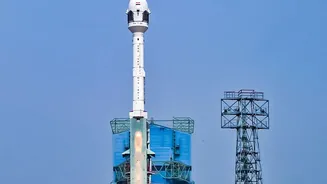
Before you can live in space, you first have to prove you can get there and back safely. This is the core purpose of the Gaganyaan programme. Its primary goal is to demonstrate India's capability to launch a crew of astronauts into a 400 km Low Earth
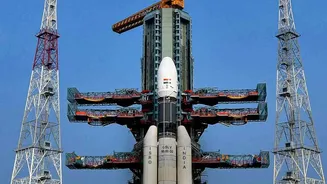
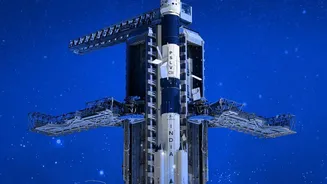
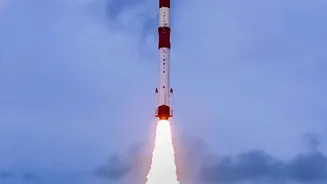
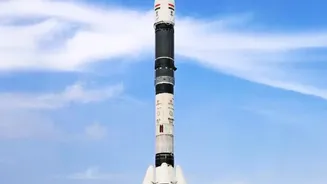
Orbit for a short mission and return them securely to Earth. This involves mastering a complex sequence of technologies. The mission relies on the human-rated LVM3 rocket, a powerful and reliable launch vehicle modified for crew safety. It also involves the Orbital Module, which consists of the Crew Module where astronauts live and the Service Module that provides support. Every uncrewed test flight and system check for Gaganyaan is not just about its own success; it's about generating the crucial data and confidence needed for more ambitious, long-duration space activities.
A Vision for a Home in Orbit
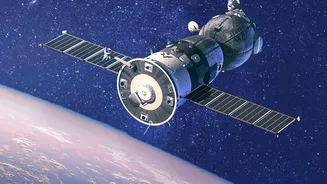
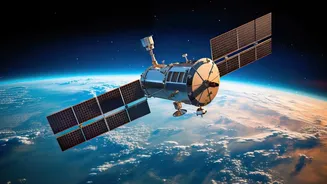
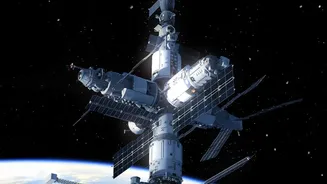
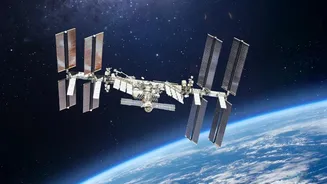
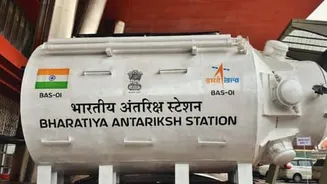
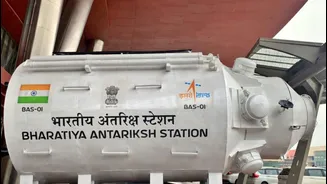
The Bharatiya Antariksh Station (BAS) represents the next logical phase of India’s space exploration ambitions: establishing a sustained human presence in space. Envisioned as a modular orbital laboratory, the station will be assembled piece by piece in orbit. The plan is to launch the first module, BAS-01, by 2028, with the full five-module station targeted for completion by 2035. This orbital outpost will allow for long-duration missions of 15-20 days, enabling Indian scientists to conduct advanced research in microgravity across fields like life sciences, material sciences, and pharmaceuticals. Building a space station is a quantum leap from a short-term mission. It requires not just getting humans to space, but keeping them healthy, safe, and productive for extended periods, a challenge the Gaganyaan mission is designed to solve first.
The Technological Bridge
The connection between Gaganyaan and the Bharatiya Antariksh Station is direct and deliberate. The technologies developed and proven under the Gaganyaan programme serve as the literal building blocks for the station. The Crew Module from Gaganyaan, a habitable space with life support and re-entry capabilities, is the blueprint for the modules of the BAS. The Environmental Control and Life Support Systems (ECLSS), which manage air, water, and temperature within the Gaganyaan capsule, are being scaled up for the larger, permanent environment of the space station. Furthermore, technologies like rendezvous and docking, which allow one spacecraft to meet and connect with another, are critical for assembling the station and for transporting crew and supplies. These systems are being tested and perfected as part of the broader human spaceflight programme.
From Launcher to Life Support
The systems proven by Gaganyaan are extensive. The Human-Rated LVM3 (HLVM3) rocket, which is central to launching the Gaganyaan crew, will also be the workhorse for lifting the heavier modules of the BAS into orbit. Its reliability is paramount for both missions. Inside the spacecraft, every system developed for the safety and comfort of the 'Vyomanauts' (astronauts) is transferable. This includes everything from the fire suppression systems designed for microgravity to the specialised food and waste management protocols. The extensive training that Indian astronauts undergo, covering everything from flight procedures to emergency survival, creates a pool of experienced personnel ready for longer and more complex missions aboard the future space station. Gaganyaan is essentially the full dress rehearsal for the main performance that will be the BAS.
The Roadmap to India's Future in Space
The development pathway is clear and phased. ISRO has already completed the baseline design review for the first module of the space station, BAS-01. With a launch target of 2028 for this initial component, the work is already in an advanced stage. The Gaganyaan mission itself is moving through a series of precursor missions to validate every system, from launch abort tests to uncrewed orbital flights, before the first crewed mission takes place. Each successful test of a Gaganyaan component, whether it's a parachute system or a life support canister, is a direct contribution to the space station project. This methodical, step-by-step approach ensures that by the time India begins assembling its home in the sky, the foundational technologies have been thoroughly tested and validated through the rigorous demands of the Gaganyaan programme.