



A Tale of Two Landings
SpaceX's fifteenth integrated flight test was its most ambitious yet, aiming to demonstrate the core principle of its next-generation launch system: full and rapid reusability. The plan involved launching the world's most powerful rocket, having both
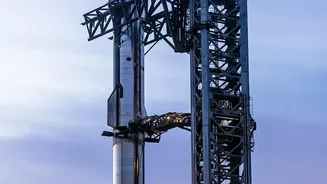
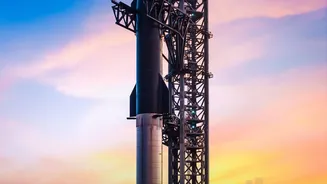
its massive first-stage booster and its upper-stage spacecraft return to the launch site in Texas, and catching both using a giant set of mechanical arms on the launch tower. Known informally as 'Mechazilla' or the 'chopsticks', this system is central to SpaceX's goal of creating a rocket that functions more like a commercial aircraft, capable of flying again with minimal turnaround time. The mission yielded a mixed but ultimately groundbreaking result. While one catch was called off, the other made spaceflight history.
Why the Booster Catch Was Aborted
Just minutes after a successful liftoff on Friday, November 13, the Super Heavy booster separated from the Starship spacecraft as planned and began its journey back to Starbase. The goal was for the 72-metre-tall booster to position itself precisely between the tower's arms for a catch. However, flight controllers detected an anomaly. According to reports, a low-fuel warning triggered the booster's automated safety system. The guidance, navigation, and control (GNC) system determined the booster was not in the correct position to ensure a safe catch and automatically diverted it. Instead of returning to the tower, the booster headed to a designated splashdown zone in the Gulf of Mexico, where it was intentionally destroyed. This decision highlights the complex safety protocols in place for such a high-risk manoeuvre.
Starship's Perfect, Fiery Return
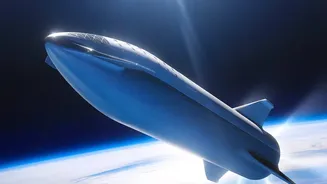
While the booster's recovery failed, the Starship upper stage continued its mission. After reaching orbit, it deployed 26 next-generation Starlink satellites and completed 14 orbits of Earth over a 22.5-hour period. Then came the main event. On Saturday, November 14, the spacecraft, known as Ship 42, began its fiery descent through the atmosphere. Protected by thousands of thermal tiles, it survived the extreme heat of reentry before performing a series of complex aerodynamic manoeuvres. In the final moments, the ship reignited its Raptor engines, flipped from a horizontal 'belly flop' position to a vertical orientation, and slowly descended into the waiting arms of the Mechazilla tower. The successful catch was the first time an orbital spacecraft had ever returned to its launch site to be recovered in this manner.
What This Means for the Future of Spaceflight
The successful Starship catch is being hailed as a monumental achievement in aerospace engineering. It validates a key component of SpaceX's business model, which relies on radically reducing launch costs through full reusability. Until now, even on the highly reusable Falcon 9 rocket, the upper stage is discarded after each mission. Proving that the Starship can survive orbit, return, and be caught for refurbishment is a critical step toward making interplanetary travel and the establishment of bases on the Moon and Mars economically viable. The mission provides invaluable data, and while the loss of the booster shows that challenges remain, the successful ship recovery is a giant leap forward. This progress is watched closely by global space agencies, including ISRO, as it sets a new benchmark for what is possible in launch vehicle technology. The achievement energises India's own ambitions within its rapidly growing private space sector, demonstrating the tangible progress being made toward a future of more accessible and sustainable space exploration.