






In a world grappling with volatile energy markets and ambitious climate goals, the conversation around nuclear power is shifting. The International Atomic Energy Agency's latest projections signal a major revival, placing nuclear energy at the heart of
the global debate on energy security.
A Resurgence in Nuclear Projections
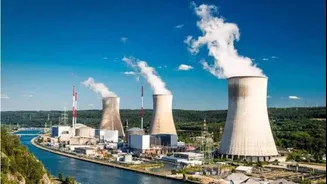
The International Atomic Energy Agency (IAEA), the world's central intergovernmental forum for scientific and technical cooperation in the nuclear field, has once again revised its forecast for the growth of nuclear power upwards. According to recent reports from the agency, global nuclear power capacity could more than triple by 2060. In its high-case scenario, the IAEA projects that worldwide nuclear generating capacity could reach 1,284 gigawatts-electric (GW(e)) by 2060, a dramatic increase from the roughly 377 GW(e) at the end of 2025. This marks the sixth consecutive year the agency has increased its projections, signaling a sustained and growing optimism for nuclear energy's role in the future. In 2025, over 400 reactors in more than 30 countries generated about 10% of global electricity and a quarter of the world's low-carbon power. With more than 60 new reactors currently under construction, the upward trend is already in motion.
Energy Security as a Primary Driver
A key factor behind this renewed interest is the global quest for energy security. IAEA Director General Rafael Mariano Grossi has highlighted that a growing number of countries view nuclear energy as essential to strengthening their energy independence. Unlike renewable sources such as wind and solar, nuclear power plants provide a consistent and reliable baseload of electricity, operating at high capacity factors—often above 90%—regardless of weather conditions. This stability is invaluable for national grids, protecting economies from the price volatility and geopolitical tensions that often plague fossil fuel markets. In an increasingly electrified world, the ability to generate large amounts of sovereign, carbon-free power makes nuclear an attractive option for governments aiming to ensure a stable energy supply for their citizens and industries.
The New Demands of a Digital World
Another powerful force accelerating the nuclear conversation is the voracious energy appetite of the digital economy. Director General Grossi specifically pointed to the rise of AI-powered data centres and the broader electrification trend as new, significant drivers for nuclear expansion. Technology companies are increasingly seeking reliable, 24/7 carbon-free power to run their massive data processing facilities, a need that nuclear energy is uniquely positioned to meet. This demand from the tech sector adds a new and influential commercial incentive to the push for nuclear power, complementing the long-standing goals of climate action and national energy security.
The India Perspective
For India, these global trends align closely with national ambitions. The country is pursuing a significant expansion of its nuclear power programme to enhance energy security and meet its development and climate goals. India aims to increase its installed nuclear capacity to an ambitious 100 GWe by 2047. Currently, India operates 23 reactors, with several more under construction. The government's strategy includes not only large conventional reactors but also the development of indigenous technologies like Small Modular Reactors (SMRs), known as 'Bharat Small Reactors', to help decarbonise industries. This push is part of India's 'Viksit Bharat 2047' vision for becoming a developed nation and achieving net-zero emissions by 2070. As a founding member of the IAEA, India has a long history of participation in global nuclear governance and continues to place its civilian facilities under IAEA safeguards.
Persistent Challenges on the Path Forward
Despite the optimistic projections, the road to tripling nuclear capacity is not without its obstacles. The financial burden remains a primary concern; nuclear power plants are multi-billion dollar infrastructure projects with high upfront capital costs. Construction timelines are often long and prone to delays and cost overruns, which can deter investors. Furthermore, public perception, shaped by concerns over safety and the long term management of radioactive waste, remains a significant hurdle in many regions. Overcoming these challenges will require not just technological innovation but also supportive government policies, streamlined regulatory frameworks, and robust financing models to translate ambition into reality.