
The Viral Sensation: AI's 'Desi Reality Check'
If you’ve been online recently, you’ve likely seen it: a clip filmed from inside a Tesla, purportedly in Gurugram, showcasing the car’s sensor display. The screen is a chaotic kaleidoscope of digital shapes representing motorcycles, cars, auto-rickshaws,
and pedestrians swarming the vehicle. Online commentary exploded with humorous takes, calling it the ultimate stress test for Tesla's tech and joking that the car was getting a "brain migraine" or its first "desi reality check." The overwhelming impression for many was that of a futuristic car flawlessly handling one of the world's most unpredictable traffic environments. The clip became a symbol of AI's potential, but it also fueled significant exaggeration about the car's actual capabilities.
Myth: The Car Is Fully Driving Itself
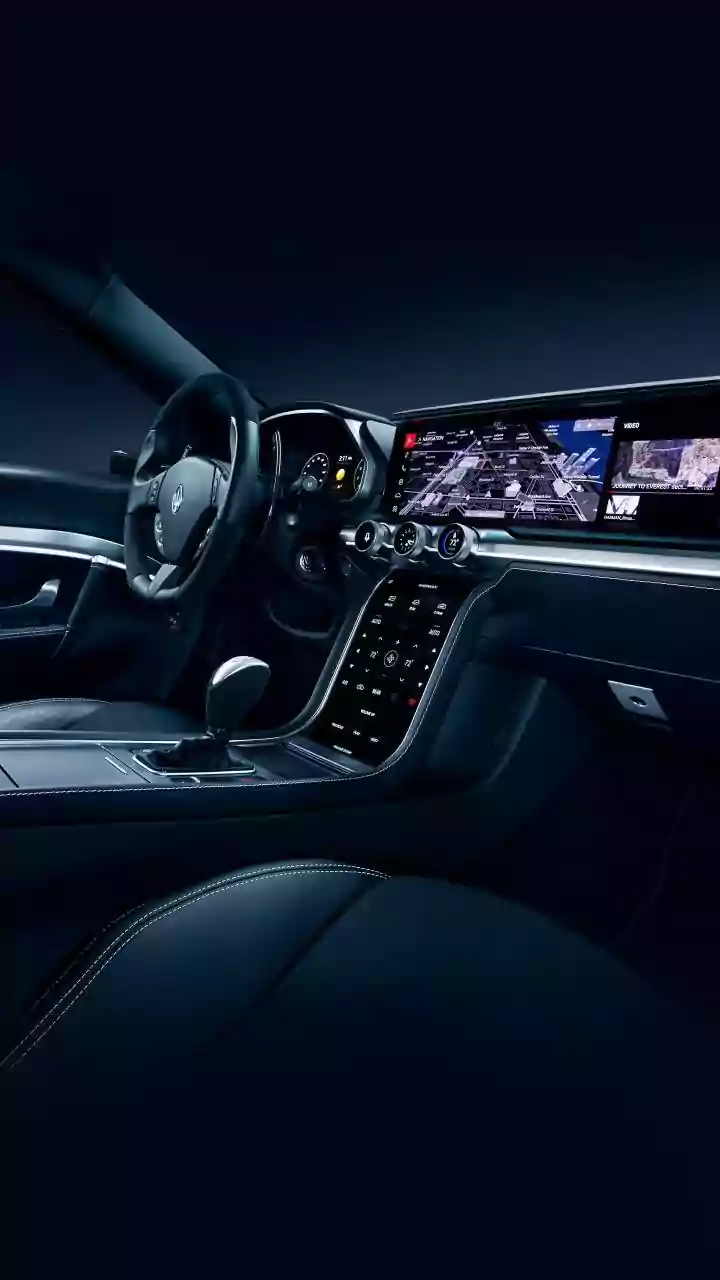
The most common misconception is that the video shows a fully autonomous car. This is incorrect. The system on display is Tesla’s Full Self-Driving (FSD) visualization, which is an advanced driver-assistance system (ADAS), not true self-driving. Even in its most advanced form, called FSD (Supervised), the technology requires the driver to be fully attentive and ready to take control at any moment. The busy screen doesn't mean the car is in complete command; it simply shows what the car's cameras and sensors are detecting. The driver is still legally and practically responsible for the vehicle's operation. Thinking of it as a highly advanced co-pilot is more accurate than picturing a completely autonomous chauffeur.
Reality: A Glimpse of Potential, Not Proof of Mastery
The video is an impressive demonstration of the system's ability to detect and track a huge number of objects simultaneously in a cluttered environment. However, a short, successful clip is not proof that the system has mastered Indian roads. Autonomous systems are challenged by "edge cases"—unpredictable events that fall outside their programming and training. Indian traffic is essentially a constant stream of edge cases. You have unpredictable lane changes, pedestrians stepping out unexpectedly, and a mix of vehicles from bicycles to trucks that don't always follow formal rules. While the system can handle many situations, its reliability in such a persistently chaotic environment is unproven. Some clips even showed the system struggling to classify auto-rickshaws, highlighting the challenge.
The Indian Context: A Unique Challenge
Indian roads present a set of challenges that are fundamentally different from the North American and European roads where these systems are primarily trained. The lack of consistent lane markings, the presence of stray animals, and the sheer density of traffic create a fluid environment that is difficult for AI to navigate safely and consistently. Current AV systems rely heavily on predictable behaviour and clear infrastructure, both of which are often absent. To be truly effective in India, an autonomous system would require massive amounts of local data and a software build specifically tailored to the unique driving culture—something that isn't available yet.
What's the Official Status of Tesla and FSD in India?
This is a crucial piece of context. As of mid-2026, Tesla has not officially launched mass-market sales or its FSD feature in India. The vehicles seen in these viral clips are typically private imports. While Tesla has listed FSD for India as "pending regulatory approval" and has removed the one-time purchase option in favour of a future subscription model, the technology is not yet approved for public use by the Ministry of Road Transport and Highways (MoRTH). The government has been cautious, citing concerns over infrastructure readiness, regulatory frameworks, and the potential impact on jobs. Therefore, any use of FSD on Indian roads is happening in a regulatory grey area without official sanction or support.