




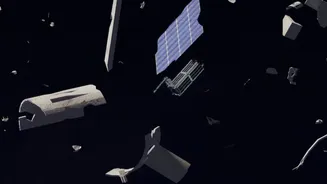

The Junkyard Above Our Heads
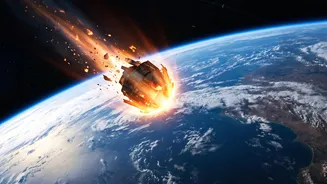
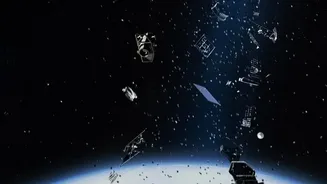
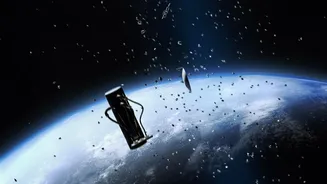
Imagine a junkyard where every piece of scrap is traveling at over 27,000 kilometers per hour. That’s the reality of Low Earth Orbit (LEO). Decades of space activity have left a legacy of defunct satellites, spent rocket stages, and millions of smaller
fragments from collisions and explosions. As of late 2026, there are over 31,000 tracked objects in orbit, but this only includes items large enough to be monitored from the ground. The true number, including smaller, untrackable but still lethal fragments, is in the millions. The rapid deployment of massive satellite constellations for internet and communications has dramatically increased orbital traffic, raising the probability of the dreaded 'Kessler Syndrome'—a cascading chain reaction of collisions that could render entire orbits unusable for generations. This isn't a distant, abstract problem; it’s a clear and present danger to active satellites that power our GPS, weather forecasting, and global communications.
A Market for Cosmic Janitors
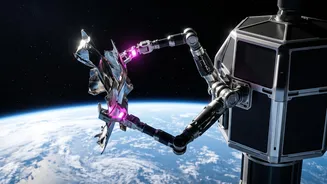
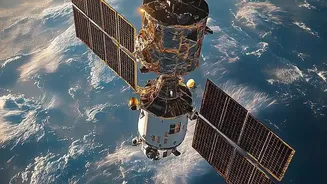
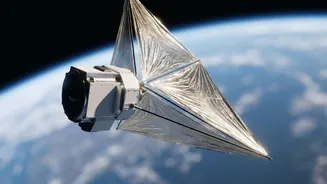
The growing danger has created a new and urgent business opportunity: actively removing debris from space. The space debris monitoring and removal market was valued at over USD 1.2 billion in 2026 and is projected to grow significantly, with some analysts predicting it will reach nearly USD 3 billion by the early 2030s. A new generation of 'space janitor' companies is emerging to tackle this challenge. Firms like Japan's Astroscale and Switzerland's ClearSpace are at the forefront, developing a range of innovative technologies. These aren't simple space nets; the solutions being tested include robotic arms for gentle capture, powerful magnets, and even harpoons to snag rogue objects. Astroscale has already conducted successful demonstration missions like ADRAS-J, designed to inspect and characterize existing debris, while ClearSpace holds a contract with the European Space Agency (ESA) for the first-ever mission to remove a piece of debris from orbit. Other players focus on tracking and avoidance, which currently makes up the bulk of the market's revenue.
The Billion-Dollar Question: Who Pays?
While the technology is advancing, the business model for debris removal is still taking shape. The fundamental challenge is that cleaning up space is a public good, but the cost is private and substantial. A single removal mission today can cost anywhere from USD 50 million to over USD 90 million. So, who will foot the bill? The market's future hinges on creating commercial demand. This is expected to come from several sources. Governments and space agencies are funding initial demonstration missions to prime the pump and reduce risk. Satellite operators, especially those with large, expensive constellations, are a key potential customer base. For them, paying for a removal service could be cheaper than losing a multi-million-dollar satellite to a collision. Furthermore, insurance companies are beginning to factor debris risk into their premiums, creating a financial incentive for operators to invest in cleaner orbital practices and end-of-life services.
The Rules of the Road Are Critical
Technology and commerce alone cannot solve the problem. The growth of the debris removal market is heavily dependent on robust regulation. For years, international guidelines were largely voluntary, like the '25-year rule' which recommended that satellites be deorbited within 25 years of their mission's end. However, the pace of launches made this obsolete. A major shift came from the U.S. Federal Communications Commission (FCC), which instituted a landmark, legally-binding 5-year deorbit rule for all new satellites under its jurisdiction. Similarly, the European Space Agency has adopted a 'Zero Debris Charter' and tightened its own requirements, aiming for a maximum five-year disposal phase. These rules are crucial because they create a mandatory market for end-of-life services. They force satellite operators to have a concrete plan for disposal, which may include contracting a third-party removal service if the satellite cannot deorbit itself. Without clear, enforceable international rules on liability and operational conduct, the market will struggle with legal uncertainties over who has the right to remove what.