






The Big Picture: A Five-State Overhaul
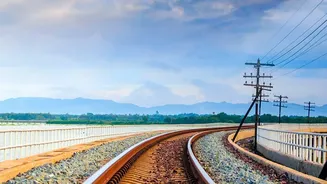
The Cabinet Committee on Economic Affairs (CCEA) recently approved three significant multitracking projects that will expand the Indian Railways network by approximately 656 kilometers. These projects are strategically located across five states: West
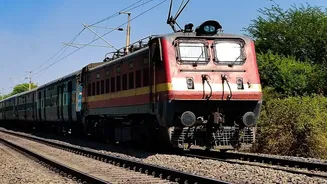
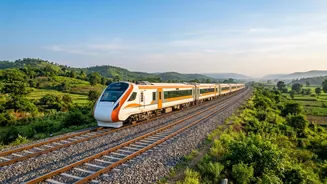
Bengal, Jharkhand, Odisha, Madhya Pradesh, and Chhattisgarh. The initiative is designed to increase the capacity of some of the country's most critical and congested railway corridors. By adding third and fourth lines to existing routes, the government aims to ease bottlenecks, improve the reliability of train services, and pave the way for more trains to operate simultaneously.
Spotlight on Key Corridors
The approved works focus on some of the busiest sections of the railway network. The projects include the construction of a fourth line between Kharagpur and Jharsuguda (Bagdehi), a fourth line for the Katni-Pendra Road section, and a third line between Bilaspur (Uslapur) and Pendra Road. These specific corridors are vital for connecting industrial heartlands with ports and other major economic centers. The upgrades are part of a broader national plan to decongest high-density networks and are aligned with the PM Gati Shakti National Master Plan, which emphasizes integrated planning for better multimodal connectivity.
Powering the Economic Engine
This expansion is about much more than just laying new tracks; it's a strategic investment in the national economy. The primary goal is to significantly boost freight capacity. The government estimates that these projects will facilitate the movement of an additional 27 million tonnes of goods per year. This is crucial for transporting essential commodities like coal, cement, and iron and steel from production centers to markets, which in turn helps stabilize supply chains and support industrial growth. By making rail transport more efficient, the initiative aims to reduce India's overall logistics costs, making the economy more competitive.
Connecting Communities and People
While freight is a major focus, the expansion will have a profound impact on passenger travel and regional development. The projects will directly improve connectivity for nearly 4,800 villages across 14 districts, benefiting a population of around 56 lakh people. For residents in these areas, better rail links mean easier and more reliable access to jobs, education, healthcare facilities, and larger markets. The improved infrastructure is also expected to boost tourism by providing smoother access to important religious and natural destinations in the region, including the Taratarini Temple and Bandhavgarh Tiger Reserve.
The Road Ahead: Timelines and Challenges
These ambitious projects are targeted for completion by the 2029-30 fiscal year. Executing infrastructure projects of this scale is a complex undertaking, often facing challenges related to land acquisition, environmental clearances, and on-ground coordination. However, the plan to use multitracking—adding lines alongside existing ones—can often be more efficient than building entirely new routes from scratch. The government's strategy is to increase the capacity of existing high-density networks to meet growing demand. Success will depend on sustained funding and streamlined execution to ensure these vital corridors are operational on schedule, delivering the promised economic and social benefits.