





What Nolan Actually Said
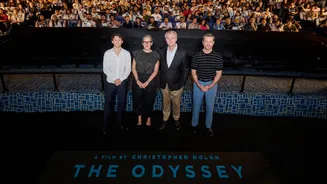
In recent interviews, Christopher Nolan, known for his preference for analog filmmaking, offered a sharp assessment of artificial intelligence's role in Hollywood. He argued that the technology is arriving at "exactly the wrong time," precisely when audiences,
particularly younger ones, are showing a renewed hunger for "tactile, more real forms of storytelling." Citing his own children, he noted their ability to quickly identify and dismiss what he termed "AI slop." He believes this generation, raised in a digital world, has an innate sense for authenticity and is "utterly rejecting" AI-driven content that lacks a human touch. However, he stopped short of a total dismissal, acknowledging that AI will be an "enormously powerful tool."
The Analogue Auteur's Nuanced Stance
For a director who famously crashed a real Boeing 747 for 'Tenet' and recreated a nuclear blast without CGI for 'Oppenheimer', this perspective is significant. Nolan's career has been a testament to the power of practical effects to create a tangible reality for audiences. His view on AI isn't a blanket rejection of technology; he has long used CGI to enhance practical work, like removing wires from stunt scenes. Instead, his comments suggest a belief that technology's role is to serve the story and the audience's connection to it. He distinguishes between photography and animation, and for him, AI-generated content currently falls into the latter category, which can feel 'safe' and less visceral to viewers. This positions his argument as less about being anti-tech and more about being pro-audience experience.
Hollywood's AI Tightrope Walk
While Nolan champions authenticity, Hollywood is cautiously embracing AI across various stages of production. Studios are using AI tools for script analysis, pre-visualization, de-aging actors, and streamlining visual effects. The 2023 Hollywood strikes highlighted deep-seated fears about AI replacing writers and actors, resulting in new union agreements that place guardrails around the use of 'synthetic actors'. Yet, the economic pull is strong, with some estimates suggesting AI could slash production costs significantly. This has created a 'don't ask, don't tell' environment where some creators use AI secretly, fearing backlash from a community that still associates the technology with soulless, cost-cutting measures rather than artistic enhancement. Publicly, studios are framing AI as a tool for assistance, not replacement.
The Audience as the Ultimate Gatekeeper
Nolan's comments tap into a crucial truth: technology is only viable if its output finds an audience. Surveys indicate a significant portion of consumers are wary, with a majority wanting to know if content is AI-generated and preferring human-made films. There's a documented 'uncanny valley' effect where near-perfect AI characters can evoke unease rather than empathy. The key seems to be transparency and application. Audiences appear more accepting of AI as a background tool for technical tasks but are resistant to it replacing core creative roles like writing and acting. Undisclosed use of AI often feels deceptive to viewers. The recent surge in Gen Z attendance at cinemas for premium, event-style movies suggests a craving for immersive, human-centric experiences, reinforcing Nolan's point about the demand for authenticity.
The View from India
The conversation around AI in cinema takes on a different dimension in India. The Indian film industry, one of the world's most prolific, is exploring AI more aggressively, partly due to different contractual norms and the immense opportunity for scalability. A key area of focus is AI-powered dubbing, which could allow a film like the upcoming 'Ramayana' to be released in over 40 languages simultaneously, drastically expanding its reach. AI tools are also being used for cost-effective VFX, script analysis, and even creating digital characters based on mythology. While this promises huge efficiency gains, the core question of audience acceptance remains. Even with the push for technological adoption, the success of these ventures will ultimately depend on whether Indian viewers embrace AI-assisted storytelling or, like the audience Nolan describes, demand the human touch they have come to expect from their cinematic heroes.