




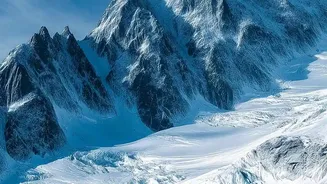
A New Height for the 'White Mountain'
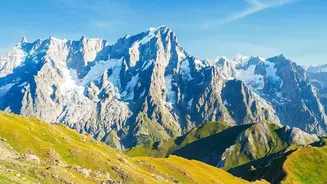
A team of French surveyors has announced that Mont Blanc now stands at 4,807.47 metres. This marks a significant increase of 1.88 metres from its measurement in 2023, which was a multi-year low of 4,805.59 metres. The announcement, made in Saint-Gervais-les-Bains
at the foot of the massif, reverses a downward trend observed in recent years. Since 2001, a team of experts has measured the mountain every two to three years to create a detailed model of its summit and track its evolution. This regular monitoring provides a crucial long-term dataset, but as chief surveyor Jean des Garets noted, the summit is in 'constant motion', and each individual measurement tells only part of a much larger story.
The Summit's Snowy Secret
So, how can a giant rock mountain grow? The secret isn't in the rock, but what sits on top of it. The rock peak of Mont Blanc is stable at around 4,792 metres above sea level. The official height, however, includes the thick cap of ice and snow that covers the summit. This 'soft' summit is what changes, its thickness fluctuating from year to year based on weather conditions. The amount of winter snowfall, the strength and direction of summer winds, and overall precipitation patterns all determine how much snow accumulates on the peak. A year with heavy snowfall and less wind to blow it away can lead to a 'growth spurt', like the one just recorded. Conversely, a dry year with more wind can cause the summit to 'shrink'.
The Science of Measuring a Mountain
Determining the height of a constantly changing peak is a serious undertaking. Every couple of years, a dedicated team of about two dozen experts makes the ascent. They carry nearly 30 kilograms of high-tech equipment, including precise satellite technology (GNSS receivers) to get an exact reading of the highest point of the snow. In recent expeditions, they have also used drones and ground-penetrating radar to build a complete 3D model of the ice cap and understand its volume and density, not just its highest point. This data allows scientists to move beyond a simple height figure and analyse the overall mass of ice at the summit, providing a more detailed 'health check' of the mountain's icy crown.
A Complex Climate Connection
The obvious question is whether this growth is good news for the climate. Experts are cautious here. They stress that a single year's fluctuation in height is a weather-driven event, not a direct indicator of climate trends. An increase in the summit's altitude does not necessarily mean the mountain has gained overall ice mass. While the very top of Mont Blanc might not be significantly impacted by climate change for now, glaciologists point to the dramatic and well-documented retreat of glaciers at lower altitudes across the Alps as the true indicator of a warming world. The data from these biennial measurements is therefore collected for future generations of scientists, who will be able to analyse the long-term trends and separate the noise of annual weather from the signal of climate change.