


The Evening Star's Peak Performance
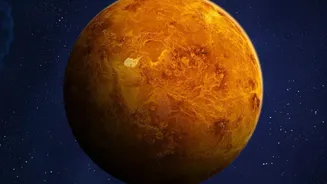
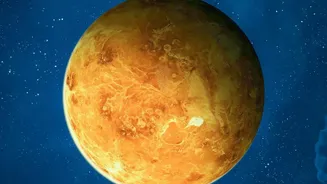
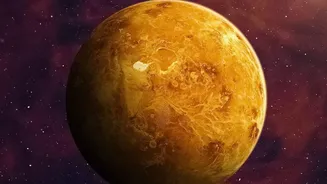
Throughout August 2026, Venus will dominate the evening sky, but the main event occurs on August 15. On this date, the planet reaches what astronomers call its greatest eastern elongation. In simple terms, this is the furthest it will appear from the Sun
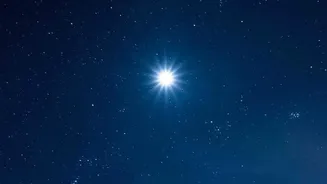
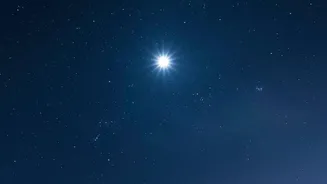
in our sky for this entire viewing period. It will blaze with a steady, silvery light, shining at a dazzling magnitude of around -4.4, making it the brightest object in the sky after the Sun and Moon. This brightness means it will be easily visible even before the sky is completely dark, appearing like a majestic lantern in the fading daylight. You won't need any special equipment; its brilliance is a spectacular sight for the naked eye.
What 'Greatest Elongation' Means
Because Venus orbits the Sun inside of Earth's own orbit, it never appears to stray very far from the Sun from our perspective. Think of Earth as a spectator watching two runners on a circular track; Venus is on an inner lane, and the Sun is at the centre. 'Elongation' is the angular distance between the Sun and the planet. Greatest eastern elongation is when Venus has swung out to its widest visible point east of the Sun, causing it to trail the sunset. This provides the best window to see it because it will be high enough above the horizon to be clear of glare, trees, and buildings, setting a couple of hours after the Sun. After this date, Venus will gradually appear to sink back toward the sunset each evening as it continues its orbit.
How to Watch From India
Spotting Venus is wonderfully simple. All you need is a clear view of the western horizon. Begin looking about 30 minutes after your local sunset. Venus will be the first and brightest 'star' to appear. Its light is very different from actual stars; whereas stars twinkle, Venus shines with a constant, unwavering glow. On August 15, the young crescent Moon may also be nearby, making for a particularly beautiful pairing in the sky. While the view is at its technical best on the 15th, Venus will be a magnificent sight for many days before and after this peak, so don't worry if you have a cloudy evening on the exact date.
More Sky Treasures in August 2026
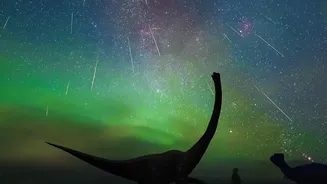
Venus isn't the only reason to look up this August. The month is packed with astronomical highlights. The famous Perseid meteor shower will peak on the night of August 12-13. This year's shower has perfect timing, as it coincides with a new moon, meaning the skies will be dark and ideal for spotting the 'shooting stars' which are actually tiny debris from Comet Swift-Tuttle burning up in our atmosphere. For the best view, find a dark location away from city lights, let your eyes adjust for about 20 minutes, and look up. You could see 50 or more meteors per hour under ideal conditions. Later in the month, on August 28, a deep partial lunar eclipse will be visible as well, turning the full 'Sturgeon Moon' a dramatic shade.