





A Volcano Hidden Beneath England
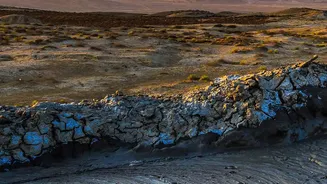
Scientists have recently uncovered compelling evidence of a massive, long-extinct volcanic system buried deep beneath eastern England. Using tiny zircon crystals extracted from borehole samples in Norfolk and Lincolnshire, researchers from the British
Geological Survey and the University of Oslo dated a major eruption to approximately 454.4 million years ago. These crystals form in magma and act like a geological clock. By analyzing the decay of uranium into lead within the zircon, scientists could pinpoint the eruption's age with remarkable accuracy. Over hundreds of millions of years, the volcano was buried under younger layers of rock, its existence hidden until now. The evidence suggests one of its eruptions was incredibly powerful, blasting several hundred cubic kilometres of ash and rock high into the atmosphere.
Solving a European Mystery
This discovery does more than just identify an ancient volcano; it may finally solve a long-standing geological puzzle. Across Northern Europe—in Sweden, Norway, Poland, and the Baltic region—there is a distinct layer of altered volcanic ash known as the Kinnekulle tephra. For years, its origin was a mystery. At the time of the eruption, the landmass that would become England was separated from Scandinavia by the Tornquist Sea. Researchers now propose that the eruption in eastern England was so immense that its ash plume traveled across this ancient sea before settling on the ocean floor in what is now Scandinavia. Chemical similarities between crystals found in the English borehole samples and those from the Kinnekulle ash layer provide strong evidence for this connection, linking the two regions in a single, colossal ancient event.
A World on the Brink of Change
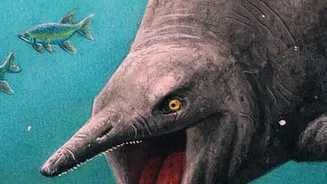
The discovery is significant not just for its scale, but for its timing. The eruption occurred during the Late Ordovician period, a time of immense biodiversity but also of great environmental stress. The planet was in a 'greenhouse' state, with high sea levels and warm oceans teeming with life. However, this period was also a prelude to one of the five largest mass extinctions in Earth's history. This event, known as the Late Ordovician mass extinction, unfolded in two distinct pulses and eliminated an estimated 85% of all marine species. For a long time, the primary cause was believed to be a rapid and severe ice age, known as the Hirnantian glaciation, which locked up water in massive ice sheets, caused sea levels to plummet, and drastically cooled the planet.
Volcanoes, Climate, and Extinction
While the glaciation was a critical factor, the role of large-scale volcanism is becoming increasingly central to the story. Massive eruptions, like the one identified beneath England, can pump enormous amounts of gases into the atmosphere. Some recent studies suggest that volcanism may have initiated a chain reaction. Initial eruptions could have released greenhouse gases that caused warming and oxygen depletion in the oceans, triggering the first pulse of extinction. Paradoxically, the subsequent drawdown of atmospheric carbon dioxide, potentially aided by geological and biological processes, then plunged the planet into a sudden ice age, leading to the second extinction pulse. This new evidence adds another major volcanic event to this critical time, suggesting the planet's climate was being violently pulled between heating and cooling, with devastating consequences for life.
What It Shows Us Today
This 454-million-year-old volcano isn't just a historical curiosity; it’s a crucial piece of evidence in understanding how Earth's systems interact. It highlights the profound impact that geology can have on the global climate and biosphere. The Ordovician extinction demonstrates that rapid environmental shifts—whether extreme cooling or warming—can be catastrophic for life adapted to a stable climate. By piecing together the triggers of this ancient crisis, including massive volcanic eruptions and subsequent climate chaos, scientists gain a clearer perspective on the delicate balance that sustains life on our planet and the powerful forces that can disrupt it. It proves that even deep within Earth’s past, there are vital lessons for understanding our own world.