
A Window Into The Deep Universe
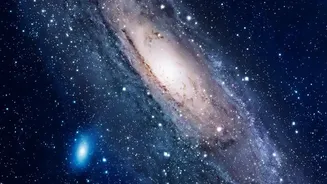
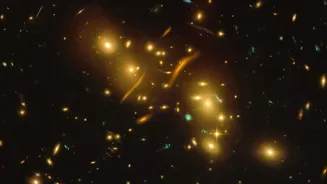
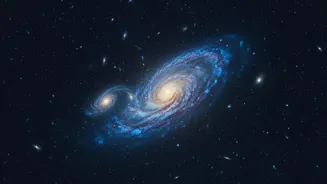
At first glance, the image looks like a velvet cloth dusted with countless tiny jewels. But nearly every single point of light in this breathtaking new view is not a star, but an entire galaxy. Released in August 2026, this image from the Vera C. Rubin
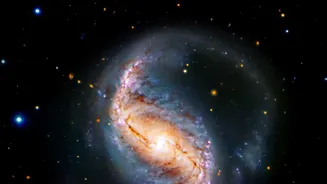
Observatory in Chile showcases the COSMOS field, a patch of sky in the constellation Sextans. Astronomers have studied this region for over two decades with tools like the Hubble and Webb telescopes for one key reason: it provides a remarkably clear window into deep space. Because it faces away from the crowded, dusty plane of our own Milky Way galaxy, there are very few foreground stars to block the view, allowing instruments to capture an unobscured look at galaxies stretching billions of light-years away. The image reveals a stunning variety of cosmic structures: delicate spiral galaxies, smooth ellipticals, and chaotically distorted galaxies in the process of merging.
The Technological Powerhouse Behind the Picture
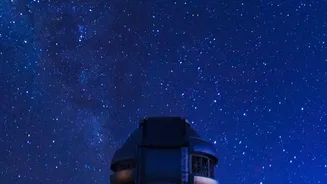
Capturing such a view required a groundbreaking piece of technology. At the heart of the Rubin Observatory is the Legacy Survey of Space and Time (LSST) Camera, the largest digital camera ever built for astronomy. Weighing three tons and roughly the size of a small car, this 3.2-gigapixel behemoth is an engineering marvel. The new image of the COSMOS field is not a single snapshot, but a masterwork of data processing. It was created by stacking hundreds of individual observations collected over several months. This process combines the light from multiple exposures to create a single, incredibly deep and detailed image, revealing faint objects that would be invisible in a shorter exposure. The sheer scale of the project, a joint effort by the U.S. National Science Foundation and Department of Energy, represents a massive investment in the business of scientific discovery.
A Movie, Not Just a Snapshot
As incredible as this single image is, its true power lies in what it represents: the first frame of the greatest movie ever made. The photograph marks the beginning of the LSST, a ten-year mission to survey the entire southern sky repeatedly. The observatory will return to the COSMOS field, and other patches of the sky, every few nights. This will transform our static view of the universe into a dynamic, time-lapse video. Scientists will be able to watch the cosmos change in near-real time. This 'cosmic movie' will capture fleeting events like exploding stars, known as supernovae, and flag them for other telescopes to study in detail. It will also track thousands of asteroids and other moving objects within our own solar system, creating the most detailed census of our cosmic neighborhood ever attempted.
Unlocking the Secrets of Cosmic Time
The project's ultimate goal is to understand change across cosmic time. In astronomy, looking far away is the same as looking back in time, since light from distant galaxies takes billions of years to reach us. This image captures galaxies at many different stages of the universe’s history all at once. By cataloging the shapes, sizes, and colors of millions of galaxies at different distances, scientists can piece together how they form and evolve. The repeated observations from the LSST will add another layer, showing how galaxies change over the course of a decade. It will provide an unprecedented dataset for probing the fundamental mysteries of the universe, including the nature of the enigmatic dark matter and dark energy that are believed to govern its structure and expansion.