





An Unexpected Twist from the Tropics
A fascinating new study has revealed an unexpected link between the tropics and Antarctica. Researchers found that a period of sustained warming in the vast oceanic region known as the Tropical Warm Pool led to a surprising outcome thousands of miles
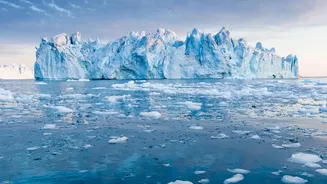
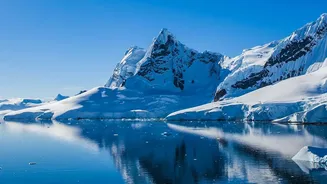
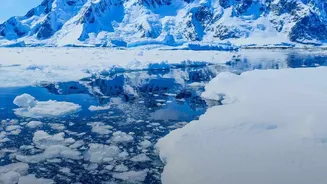
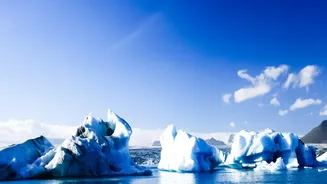
south. Between 2021 and 2023, this patch of exceptionally warm water in the western Pacific and eastern Indian Oceans triggered a series of atmospheric changes. These changes funneled moisture toward Antarctica, resulting in unusually heavy snowfall over the eastern part of the continent. This led to a temporary gain of about 695 billion tons of ice, briefly slowing Antarctica's overall trend of ice loss. While this event doesn't reverse the long-term melting trend, it highlights a previously underappreciated connection, showing how a remote tropical 'regulator' can directly influence the mass of the Antarctic ice sheet.
The Bigger Picture in Antarctica
Despite the temporary snow-driven gains in East Antarctica, the broader situation for the continent, particularly in the west, remains a serious concern. Scientists are closely monitoring the Thwaites Glacier, often called the 'Doomsday Glacier', which is roughly the size of Florida. Recent research indicates its retreat is accelerating, and its protective floating ice shelf is weakening and could break up in the coming years. The loss of these ice shelves is critical because they act as a buttress, slowing the flow of inland glaciers into the sea. Across the continent, ice loss has accelerated significantly in recent decades. The process has been described as 'Greenlandification,' as the patterns of melting and glacier retreat in Antarctica are beginning to mirror those of its rapidly melting northern counterpart.
Earth's Engine Room: The Tropical Warm Pool
The Tropical Warm Pool (TWP) is a massive area of the planet's warmest ocean water, consistently above 28°C, located where the western Pacific Ocean meets the eastern Indian Ocean. Think of it as the engine room for the world's climate. Its immense heat and moisture are major drivers of global weather patterns, including the powerful El Niño-Southern Oscillation. Worryingly, this warm pool has been expanding significantly. In recent decades, its size has nearly doubled, a change largely attributed to climate change. This expansion alters global rainfall patterns and can influence the behaviour of major weather systems originating in the tropics.
Why This Connection Matters for India
This planetary-scale connection has direct implications for India. The Indian Ocean component of the warm pool system plays a crucial role in the health of the Asian monsoon. The temperature gradients across the ocean help drive the circulation and rainfall patterns that are vital for the subcontinent. Studies have shown that warming in the western Indian Ocean, which is happening faster than in other tropical oceans, can weaken the land-sea temperature contrast that powers the monsoon, potentially leading to reduced rainfall over central India. Furthermore, smaller, more localized patches of extremely warm water, like the Arabian Sea Mini Warm Pool, can influence monsoon onset and trigger extreme rainfall events. Understanding how changes in both Antarctica and the broader Tropical Warm Pool affect these delicate balances is critical for predicting India's future climate and water security.