





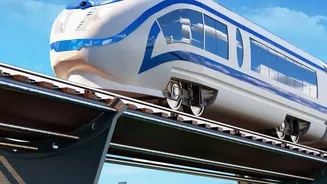
What Exactly Is This LNG Train?
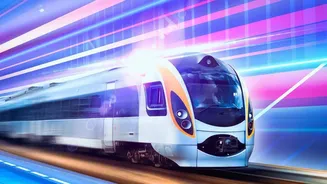
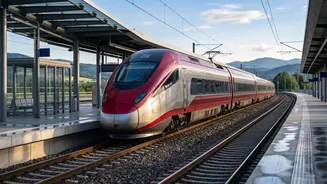
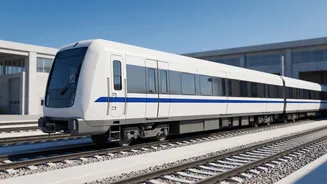
On September 27, 2026, Indian Railways flagged off its first train using a Liquefied Natural Gas (LNG) and diesel dual-fuel system from Sabarmati in Gujarat. This is not a brand-new train built from scratch, but rather a modification of an existing Diesel
Electric Multiple Unit (DEMU) train. Specifically, engineers have retrofitted two 1,400 HP Driving Power Cars (DPCs)—the engine units of the train—to run on a blend of both fuels. The inaugural run was an eight-coach, non-AC passenger train operating between Sabarmati and Mahesana Junction. Before this public launch, the system underwent over 2,000 kilometres of rigorous field trials to ensure its safety, performance, and reliability under real-world conditions.
How the Dual-Fuel System Works
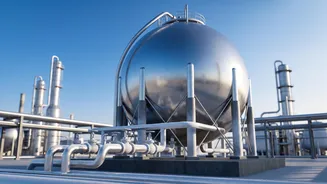
The core of this innovation lies in its dual-fuel technology. The engine is designed to run primarily on diesel, but the new system allows it to substitute a significant portion—up to 40%—with LNG. LNG, which is natural gas cooled to a liquid state at –162°C, is stored in a special 2,200-litre cryogenic tank fitted to each power car. This system provides crucial flexibility; the train can run on the LNG-diesel blend, but if LNG is unavailable, it can operate on diesel alone without any interruption to service. This is a key distinction from technologies like hydrogen trains, which require an entirely new propulsion system. The LNG train is an adaptation of existing infrastructure, making it a more transitional step.
The Driving Forces: Cost and Environment
Indian Railways is one of the largest consumers of diesel in the country, and the move towards alternative fuels is driven by two main goals: reducing operational costs and curbing pollution. Trial estimates project that using LNG could save approximately ₹11.9 lakh per power car annually, which adds up to nearly ₹24 lakh for an eight-coach train. Environmentally, LNG is a cleaner-burning fossil fuel than diesel. Its use is expected to significantly reduce emissions of carbon dioxide (CO₂), nitrogen oxides (NOx), and harmful particulate matter (PM). This aligns with the national transporter's broader ambition to achieve Net Zero carbon emissions by 2030 and reduce its dependence on imported crude oil.
Why This Is a Trial, Not a Revolution
The headline says it all: this is a technology trial. While promising, scaling this LNG-diesel system across the entire Indian Railways network presents significant challenges. The most immediate hurdle is infrastructure. A nationwide rollout would require a massive investment in cryogenic storage facilities and a complex supply chain to ensure LNG is available for refuelling at depots across the country. For now, this pilot project serves as a crucial learning experience. It allows the Railways to gather data on performance, maintenance requirements, and long-term savings in a controlled environment. The success of this Sabarmati-based trial will determine if and how the technology is expanded to other non-electrified or low-density routes where it makes the most economic and logistical sense.
The Bigger Picture: A Multi-Pronged Approach
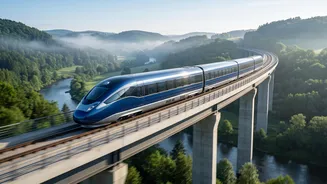
The LNG train is just one piece of Indian Railways' larger green transition strategy. It complements other major initiatives, including the aggressive push for 100% electrification of high-density routes and the recent launch of India's first hydrogen-powered train in July 2026. While electrification remains the top priority, technologies like LNG and hydrogen offer solutions for routes where laying electric lines is not immediately feasible. Hydrogen trains, which use fuel cells to generate electricity with water as the only byproduct, represent a more radical technological shift towards zero-emission transport. The LNG train, by contrast, is a pragmatic intermediate step—a bridge fuel technology that allows for immediate emission and cost reductions using modified versions of existing assets.