






A New 'Wide-Angle' Eye on the Cosmos
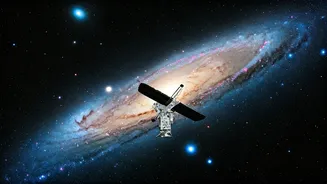
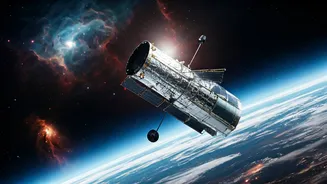
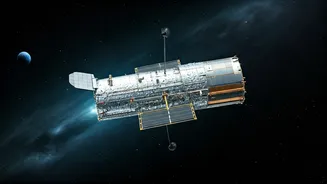
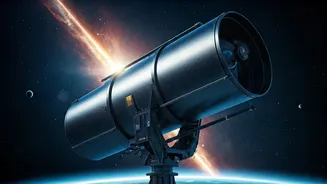
Named after Nancy Grace Roman, NASA's first chief astronomer and the "Mother of Hubble," the Roman Space Telescope is a flagship mission with a unique capability. While its primary mirror is the same size as the Hubble Space Telescope's, its Wide-Field
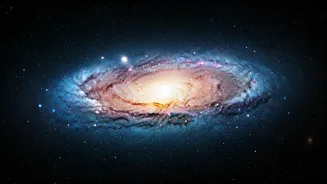
Instrument gives it a field of view 100 to 200 times larger. This means that for every single picture Hubble takes, Roman can capture the equivalent of 100, creating vast, panoramic images of the cosmos with the same sharp resolution. This incredible survey speed will allow astronomers to map the universe in ways never before possible, gathering unprecedented amounts of data. Set to launch on August 30, 2026, aboard a SpaceX Falcon Heavy rocket, the observatory recently arrived at the Kennedy Space Center to begin its final preparations.
The Ultimate Planet Hunt
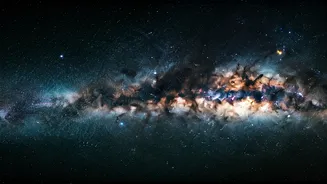
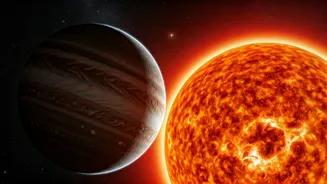
One of Roman’s primary goals is to complete a census of exoplanets in our galaxy. To do this, it will employ a fascinating technique predicted by Albert Einstein called gravitational microlensing. This method works by monitoring the light from distant stars. When another star and its planets pass in front of that background star, their combined gravity acts like a lens, bending and magnifying the light in a way that astronomers can detect. These microlensing events are brief and unique, but Roman's wide, persistent stare towards the dense center of the Milky Way will allow it to spot thousands of them. This technique is particularly powerful for finding planets that are difficult to detect with other methods, such as worlds far from their star and even "rogue planets" that wander through space without a star to orbit at all.
Unmasking the Mystery of Dark Energy
Beyond hunting for planets, Roman will address one of the most profound puzzles in physics: dark energy. This mysterious force is believed to be responsible for the accelerating expansion of the universe, but scientists don't yet know what it is. Roman will investigate it by conducting massive surveys of billions of galaxies and thousands of exploding stars called supernovae. By precisely measuring their distances and how they are distributed across the cosmos, the telescope will create a vast 3D map of the universe's structure. This map will help scientists trace the history of cosmic expansion, allowing them to test different theories about the nature of dark energy and how it has shaped the universe over billions of years.
A Perfect Partner for Webb
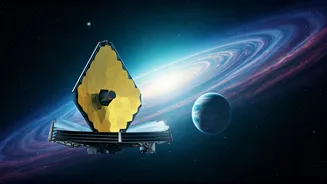
The Roman Space Telescope isn't a replacement for observatories like the James Webb Space Telescope (JWST); it's a powerful partner. While Webb is designed to peer deeply into small patches of the sky to study objects in extreme detail, Roman is a survey instrument designed to see the big picture. Roman can rapidly scan huge areas, identifying rare and interesting objects—like the most distant galaxies or unusual planetary systems—that Webb can then study in greater detail. Together, Roman's wide-angle panoramas and Webb's deep, focused vision will provide a more complete and complementary view of the cosmos than ever before.