








The Promise of Phages
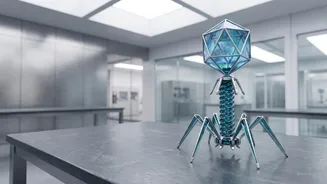
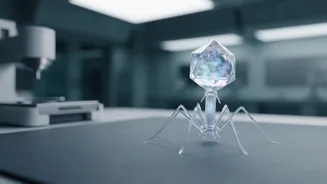
First, let’s talk about the stars of this story: bacteriophages. The name literally means 'bacteria devourer,' and that’s precisely what they do. Phages are viruses that have evolved to infect and kill specific types of bacteria, making them harmless
to humans, animals, and plants. For decades, scientists have seen them as a potential weapon against antibiotic-resistant superbugs, a growing global health crisis. The problem has always been that finding the right natural phage to fight a specific bacterial infection is a slow, painstaking process. Bacteria can also quickly evolve to resist them, sending researchers back to square one.
AI as a Biological Designer
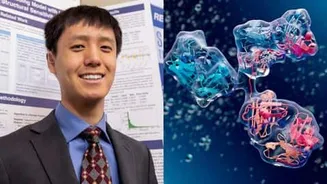
This is where artificial intelligence changes the game. Researchers, notably a team at Stanford University, have trained AI models on massive datasets containing millions of DNA sequences from natural phages. Similar to how a large language model learns to write an email by studying text, these 'genome language models' learn the fundamental rules of viral genetics. They understand what makes a viral genome functional—how its genes must be organized and interact to successfully build a virus that can infect its target. The AI can then be prompted to generate entirely new, functional phage genomes from scratch, designed specifically to attack a target like E. coli.
A Groundbreaking Experiment
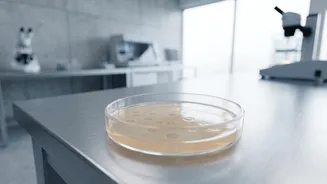
This recently moved from theory to reality. In a landmark study, researchers used AI models to design thousands of potential phage genomes. They then selected hundreds of these AI-generated DNA sequences, synthesized them chemically in a lab, and tested their ability to create working viruses. The results were stunning: sixteen of the AI's designs produced viable phages that successfully infected and killed E. coli bacteria. In some lab tests, a cocktail of these AI-designed phages was even effective against bacteria that had developed resistance to their natural counterparts. It marked the first time fully functional viruses, with genomes that do not exist in nature, were designed by an AI.
The Dual-Use Dilemma
The power to design viruses on demand is a classic example of 'dual-use' technology—a tool that can be used for immense good or significant harm. The same technology that could create new antibiotics could also, if misused, lower the barrier to developing biological weapons. While the Stanford researchers took careful safety precautions, intentionally excluding any data on viruses that infect humans from their AI's training, the experiment highlights a growing concern. What happens when these powerful AI design tools become widely available? Experts in biosecurity warn that the ability to generate viral genomes now exists, but the governance to safely steer it does not.
Building Scientific Guardrails
The experiment has intensified calls for 'responsible AI science.' This involves creating a framework of safeguards to manage the risks before they escalate. Scientists and ethicists are proposing several layers of protection. One key area is screening the orders placed with companies that synthesize DNA, as there are currently few checks to prevent a dangerous, AI-designed sequence from being physically created. Another is building safety directly into the AI models, as the Stanford team attempted to do. There is a growing consensus among scientists that the community must proactively establish clear guidelines and commitments to ensure this powerful technology remains a force for good. The goal is to balance the incredible pace of innovation with the foresight needed to prevent misuse.