



The Zero-Gravity Challenge
On Earth, your heart constantly works against gravity to pump blood throughout your body. In the microgravity of space, this relentless workload disappears. Almost immediately, astronauts experience a shift of fluids from their lower body towards their head
and chest. This fools the body into thinking it has too much fluid, triggering a reduction in blood volume. With less blood to pump and no gravity to fight, the heart muscle begins to decondition. Scientists have long known that this can lead to a loss of muscle mass, a condition known as cardiac atrophy. For short missions, this isn't a major concern. But for a round trip to Mars, which could take up to three years, ensuring the heart remains strong is critical for astronaut survival.
A Closer Look at the Heart
To understand these changes better, a recent observational study followed 13 astronauts on missions aboard the International Space Station (ISS). The research, led by Northwestern Medicine and involving NASA, tracked the astronauts' heart structure and function before, during, and after their flights, which lasted around six months. Using detailed ultrasound imaging performed right on the ISS, scientists could see in near real-time how the astronauts' hearts were adapting to the strange new environment of space. This kind of detailed, long-term monitoring provides a crucial window into the cardiovascular stresses of spaceflight and how the body copes.
What the Study Revealed
The findings were both expected and reassuring. During the first few weeks in space, the astronauts' hearts showed a reduction in the amount of blood they filled with and pumped out with each beat. This is a logical adaptation to the lower blood volume and workload. However, the study found that this was a temporary adjustment. As the missions continued, cardiac performance gradually returned toward pre-flight levels, suggesting a successful adaptation. Another study involving astronaut Scott Kelly showed his heart lost some mass over his year in space, but its overall function remained good. Crucially, the 13-astronaut study showed that thanks to rigorous daily exercise routines, the cardiovascular system adapted well without signs of major strain.
The All-Important Mars Connection
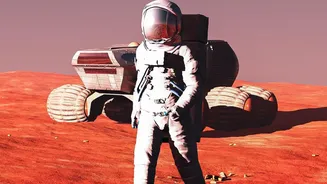
The key question for Mars missions is whether an astronaut's heart, after months in zero gravity, can handle the sudden reintroduction of gravity upon landing. Mars' gravity is only about 38% of Earth's, but it's a significant change from weightlessness. To test this, researchers simulated a 'Mars landing' after the astronauts returned to Earth. They tilted the astronauts in a way that mimicked the gravitational pull on Mars. The results were encouraging: the astronauts' hearts handled the simulated Martian environment just as well as they had handled standing upright on Earth before their missions began. This suggests that with current exercise countermeasures, astronauts may be able to transition to the Martian surface without suffering from severe orthostatic intolerance—the dizziness and fainting that can occur when the cardiovascular system fails to adapt to gravity.
The Path Forward
While this research is positive, it also highlights the absolute necessity of exercise. Astronauts on the ISS spend about two hours a day on specially designed treadmills, stationary bikes, and resistance equipment to combat muscle and bone loss. This study confirms that this intense regimen is also essential for maintaining heart health. Future research will continue to refine these exercise protocols. Scientists are also exploring other potential countermeasures, like artificial gravity generated by centrifuges, which could help simulate Earth-like gravitational forces during long journeys. Understanding these mechanisms not only makes space travel safer but also provides insights into heart conditions for people on Earth, particularly those on extended bed rest who experience similar cardiac deconditioning.