






The Traditional Innerspring: What Are Connected Coils?
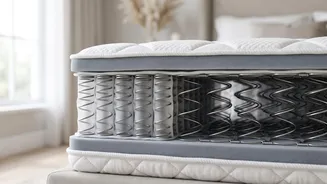
For decades, the standard mattress was built with a connected coil system, also known as an open coil or Bonnell coil system. In this design, all the metal springs are linked together by wires, forming a single, unified grid. When you apply pressure to one
area, the entire network of springs responds as a single unit. This construction creates a firm, often bouncy surface that distributes weight broadly across the mattress. It’s a durable and cost-effective technology, which is why it remains a popular choice for budget-friendly mattresses and guest rooms. The downside of this interconnectedness is that movement easily travels from one side of the bed to the other, a phenomenon known as motion transfer.
A Modern Approach: How Pocket Springs Work
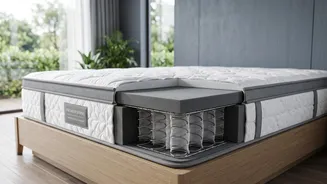
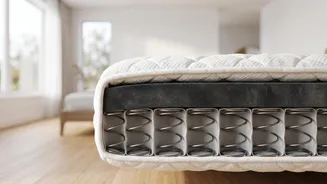
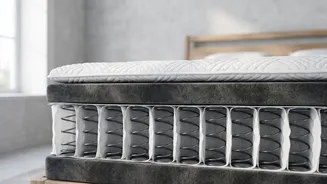
Pocket spring mattresses, sometimes called pocketed or Marshall coils, take a completely different approach. Instead of a linked grid, these mattresses contain hundreds or even thousands of individual springs, each one encased in its own fabric pocket. These fabric sleeves are attached to each other, but the springs inside can move independently. Think of it like the keys on a piano: pressing one doesn't automatically move the others. This design allows each coil to compress and respond only to the pressure applied directly to it, isolating movement and offering a more targeted response to your body.
The Main Event: Handling Movement and Disturbance
The most significant difference for anyone sharing a bed is how each system handles motion. With connected coils, a partner’s toss or turn sends a ripple effect across the entire bed, because the springs are all wired together. For light sleepers, this can lead to frequent disturbances. Pocket springs are the clear winner for motion isolation. Because each coil absorbs energy locally, movement on one side of the bed is far less likely to be felt on the other. While it may not eliminate all vibrations, the improvement is significant, making pocket spring mattresses an excellent choice for couples.
Beyond Movement: Support and Body Contouring
Support isn't just about firmness; it's about how the mattress conforms to your body to maintain proper spinal alignment. Connected coil systems provide a uniform, firm level of support across the entire surface. This can be beneficial for back and stomach sleepers who need to prevent their hips from sinking too deeply. However, this uniform push-back doesn't contour well to the body's natural curves. Pocket springs excel at providing more precise, contouring support. They can adapt to different body shapes and sleep positions, allowing heavier areas like the hips and shoulders to sink in slightly while supporting lighter areas like the lower back. This tailored support is often preferred by side sleepers and those with back pain.
Considering Durability and Cost
When it comes to price, connected coil mattresses are typically the more budget-friendly option due to their simpler manufacturing process. Pocket spring systems are more complex to produce, which generally places them in a higher price bracket. In terms of durability, both types can last for years with proper care, often between 7 and 10 years. Some argue that high-quality pocket spring mattresses may have a slight edge in longevity because the independent coils distribute weight more evenly, reducing the likelihood of specific areas sagging over time. However, the overall durability of any mattress also depends heavily on the quality of the other materials used, such as foam and upholstery layers.