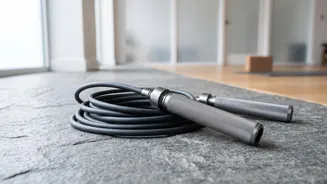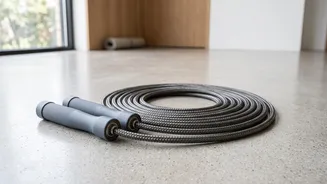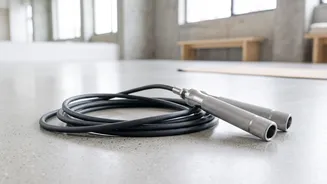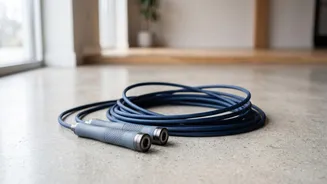





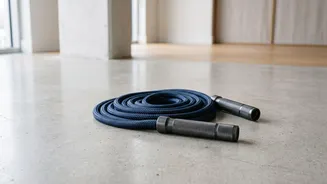


In the quest for efficient and effective exercise, running and jumping rope stand out as two accessible, powerful options. Both promise a serious cardiovascular workout, but they challenge the body in different ways, especially when it comes to coordination.
The Cardiovascular Question
When it comes to cardiovascular demand, both running and jumping rope are top-tier choices. The 'better' one often depends on intensity and duration. Research has famously shown that 10 minutes of jumping rope can produce similar cardiovascular improvements to 30 minutes of jogging. This makes jumping rope an incredibly time-efficient option for those with packed schedules. Calorie burn estimates often show that, minute for minute at a vigorous pace, jumping rope can burn as many or even more calories than moderate running. This is partly because jumping rope is a full-body exercise; it engages the calves, quads, and core for jumping, plus the shoulders and wrists for turning the rope. Running is primarily a lower-body activity. However, the advantage for running is sustainability. Many people find it easier to run for a continuous 30 or 45 minutes than to jump rope for that long, especially as beginners. For building long-distance endurance, running remains the more traditional and direct approach.
A Tale of Two Coordinations
Coordination is where the two activities really diverge. Jumping rope is a masterclass in rhythm and timing. It forces the hands, feet, and eyes to work in perfect sync. The rope itself provides immediate feedback—if your timing is off, the exercise stops. This rapid feedback loop helps to quickly refine motor patterns, enhancing agility, balance, and hand-eye coordination. It trains the body to be light on the balls of its feet, a skill prized by athletes in sports like boxing and volleyball. Running also develops coordination, but of a different kind. It hones the body's ability to maintain a stable gait and orchestrate the complex movement of limbs over varying terrain. This involves proprioception, which is the body's awareness of its position in space, helping to prevent missteps and falls. While a beginner can start running with almost no learning curve, the coordination it builds is more about efficiency of forward motion and less about the rhythmic, multi-limb timing that defines jumping rope.
Impact, Joints, and Injury Risk
The perception is that running is hard on the knees, and this is often true. Each running stride can send a force of 1.5 to 3 times your body weight up through your leg, typically with a heel strike. This repetitive impact is a common source of injuries for runners. Jumping rope, when done with proper form, can be a lower-impact alternative. The correct technique involves small bounces on the balls of the feet with knees slightly bent, which allows the leg muscles to act as natural shock absorbers. The impact force can be less than running, making it a viable option for those concerned about joint stress. However, form is critical. Jumping too high, landing flat-footed, or using a hard surface can negate these benefits. Ultimately, both are high-impact activities compared to swimming or cycling, and proper form is key to mitigating injury risk in either one.
Convenience, Cost, and Accessibility
In terms of practicality, running is almost free; all you truly need is a decent pair of shoes. It can be done almost anywhere outdoors. Its main drawback is dependency on weather and daylight. Jumping rope has a low barrier to entry, requiring only an inexpensive rope. Its major advantage is convenience. It can be done indoors in a small space, at any time of day, regardless of the weather. This makes it easier to fit into a daily routine. While running is more beginner friendly from a skill perspective, many people master the basic jump rope bounce within a few sessions.