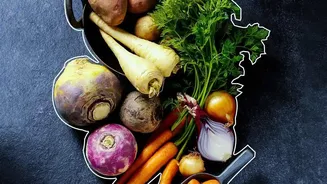



The Deep Reds of Beetroot
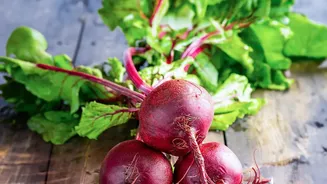
Known as chukandar, beetroot’s stunning crimson colour comes from powerful antioxidants called betalains. These compounds are celebrated for their anti-inflammatory properties and ability to support the body's detoxification processes. With its distinctly
earthy and slightly sweet flavour, beetroot is incredibly versatile. Enjoy it grated raw into salads for a crunchy, colourful lift, or blend it into a raita for a vibrant pink dip. For a hearty meal, it can be cooked into a delicious sabzi, where its sweetness balances perfectly with Indian spices. Drinking beetroot juice is also a popular way to harness its benefits, as it may help improve blood flow and stamina.
The Rich Oranges and Purples of Carrot
The humble carrot, or gajar, is a staple in every Indian kitchen, but its colour spectrum goes far beyond the familiar orange. While orange carrots are famously rich in beta-carotene, which the body converts to Vitamin A for healthy vision and immunity, other varieties offer different benefits. Red carrots contain lycopene, an antioxidant also found in tomatoes, while purple and black carrots are packed with anthocyanins, which possess anti-inflammatory properties. Whether you’re making a classic gajar ka halwa, adding them to a mixed vegetable curry, or simply munching on them raw, incorporating a variety of colourful carrots can broaden your nutrient intake.
The Bright Hues of Sweet Potato
Sweet potato, or shakarkandi, is a wonderfully comforting and nutritious root. The common orange-fleshed variety is a fantastic source of beta-carotene, essential for eye and skin health. However, the increasingly popular purple sweet potato is a nutritional powerhouse in its own right, boasting high levels of anthocyanins—antioxidants that help protect cells from damage and may support brain health. Purple sweet potatoes have an earthier flavour and firmer texture, making them great for roasting into wedges or adding to savoury dishes. The orange kind is sweeter and softer, perfect for the traditional roasted chaat, mashing, or adding to soups.
The Crisp Whites and Pinks of Radish
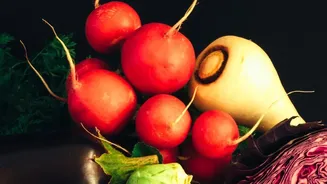
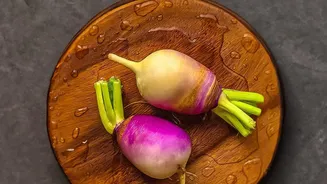
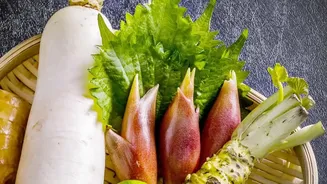
Don’t overlook the radish, or mooli, in your quest for colour. Its crisp, white flesh and vibrant pink or red skin add both a peppery bite and a visual pop to meals. Radishes are packed with nutrients like Vitamin C and antioxidants that help fight cellular damage. They are also a good source of dietary fibre, which aids digestion. In Indian cuisine, radishes are a star ingredient in mooli parathas, where their sharp flavour is mellowed by cooking. They can be grated into salads for a refreshing crunch, pickled to make a zesty condiment, or added to sambar and other curries. Even the leaves are edible and nutritious.
The Golden Glow of Turmeric
While technically a rhizome, fresh turmeric (kacchi haldi) is used like a root vegetable and is prized for its brilliant golden-orange colour. This colour comes from curcumin, a compound renowned for its potent antioxidant and anti-inflammatory effects. Fresh turmeric has a more earthy and lively flavour than its dried powder form. It can be grated into curries, rice dishes, smoothies, or used to make pickles. Pairing it with a fat source and a pinch of black pepper can help increase the absorption of curcumin, maximizing its health benefits. Incorporating this golden root is an easy way to add both colour and a significant health boost to your cooking.