






A City Pulled From Obscurity
For centuries, the story of Sirpur, once the thriving capital of the Dakshina Kosala kingdom known as 'Shripur', was largely forgotten. First brought to modern attention in 1882 by Alexander Cunningham, the founder of the Archaeological Survey of India,
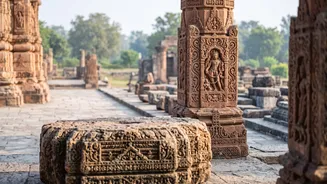
the site's true scale remained hidden until major excavations began in the 1950s and accelerated dramatically after 2003. What archaeologists uncovered was staggering: a sophisticated urban centre that flourished between the 5th and 12th centuries, complete with palaces, markets, and advanced public infrastructure. Today, walking through Sirpur is like stepping into a live excavation, a place where history is actively being pieced together from the earth.
A Harmony of Faiths Carved in Brick
Perhaps the most compelling reason Sirpur is so significant is its rare display of religious syncretism. It's one of the few places in India where evidence of Hindu, Buddhist, and Jain traditions flourishing side-by-side is so clearly preserved in the architecture. Excavations have revealed 22 Shiva temples, 5 Vishnu temples, 10 Buddhist viharas (monasteries), and 3 Jain viharas. This peaceful coexistence is remarkable. The Hindu Panduvanshi king Mahashivagupta Balarjuna, a Shaivite himself, patronised the construction of the Anand Prabhu Kuti Vihara, a Buddhist monastery, a testament to the era's profound cultural tolerance. This unique blend of faiths sharing a common architectural language makes Sirpur an exceptional example of social harmony in ancient India.
The Masterpiece: Lakshmana Temple
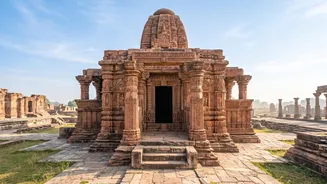
The crown jewel of Sirpur is the 7th-century Lakshmana Temple, considered one of the finest and best-preserved brick temples in all of India. Dedicated to Vishnu and built by Queen Vasata, it stands on a massive stone platform, its brick tower (shikhara) showcasing an extraordinary level of craftsmanship. Architects transformed simple brick into a highly expressive medium, creating intricate carvings and decorative patterns that have survived for over 1,400 years. It represents a pivotal moment in temple engineering, demonstrating a sophisticated blend of structural innovation and artistic elegance that was cutting-edge for its time.
An Urban Centre Ahead of its Time
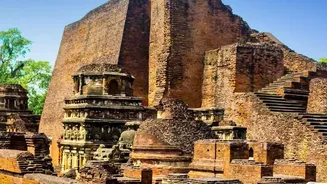
Beyond its temples, Sirpur’s archaeology reveals a city with surprisingly modern urban planning. The site shows evidence of a well-organised layout, including a 6th-century market complex, residential quarters, and advanced water management systems with baths and drainage channels. The discovery of the Teevardev Vihara, a sprawling Buddhist monastery complex believed to be larger than the one at Nalanda, shocked historians and reshaped our understanding of the region's importance. The presence of colossal Buddha statues, including one over eight feet tall, and accounts from the 7th-century Chinese traveler Xuanzang, further paint a picture of Sirpur as a major international hub for religion, trade, and learning.
The Journey to World Heritage Status
Its inclusion on UNESCO's Tentative List in October 2026 is the first formal step toward becoming a World Heritage Site. The case for Sirpur rests on its 'Outstanding Universal Value'. The nomination highlights its role as a riverine urban centre, the interchange of human values reflected in its multi-faith art and architecture, and its testimony to the cultural traditions of early medieval Central India. While the final inscription is not yet guaranteed, this recognition puts Sirpur on the global map, acknowledging its importance as a treasure of human history. The next step involves preparing a detailed dossier for UNESCO's evaluation over the coming year.