


The Dahi Kebab Dilemma: Why They Break
The very ingredient that gives dahi kebabs their name is also their biggest challenge: dahi, or curd. Even after being hung for hours to drain excess whey, the resulting hung curd is inherently moist and lacks structure. This high moisture content is why
so many homemade dahi kebab mixtures are too soft or sticky, making them difficult to shape and prone to breaking apart in the pan. Traditionally, cooks use binding agents like roasted gram flour (besan) or breadcrumbs to absorb this moisture. While effective, these can sometimes result in a denser or drier kebab, overshadowing the curd's delicate flavour. The goal is to find a binder that provides structure without compromising the signature creamy interior.
Why Paneer is the Perfect Partner
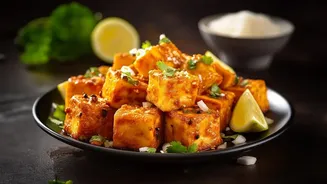
This is where paneer comes in. Adding crumbled or grated paneer to the hung curd mixture is a game-changing technique used to achieve flawless dahi kebabs. Paneer acts as a brilliant binding agent because it has a unique ability to absorb excess moisture from the curd while simultaneously adding its own creamy, milky richness. Unlike flour or breadcrumbs, which can sometimes taste pasty if not used correctly, paneer has a neutral flavour that complements the tangy yogurt perfectly. It provides the necessary 'body' or structure, making the kebab mixture firm enough to handle and shape, ensuring they don't fall apart during frying. The result is a kebab that is crisp on the outside but impossibly soft and luscious on the inside.
Getting the Ratio and Texture Right
The key to success is balance. You want enough paneer to provide structure, but not so much that it overpowers the dahi. A good starting point is a ratio of roughly two parts hung curd to one part grated paneer. For example, if you have one cup of hung curd, start with half a cup of finely crumbled or grated paneer. Using homemade paneer is highly recommended for the best texture, as it tends to be softer. Mash the grated paneer and hung curd together until they form a smooth, cohesive dough. This initial mix is crucial before adding your spices and aromatics like ginger, green chillies, and fresh coriander.
Other Binding Agents and Why Paneer Shines
While paneer is a fantastic choice, it's not the only option. Roasted gram flour (besan) is a traditional and effective binding agent that also imparts a nutty aroma. Breadcrumbs are another common choice, particularly for adding bulk and helping to create a crisp exterior. Some recipes even call for boiled and mashed potatoes for structure. However, paneer often proves superior because it enhances the creamy, melt-in-the-mouth quality that makes dahi kebabs so special, something that potatoes or too much besan can diminish. The combination of paneer for body and a small amount of roasted besan for flavour is a popular and effective method.
Essential Tips for Flawless Kebabs
Beyond adding paneer, a few other techniques are vital. First, ensure your curd is properly hung. Place it in a muslin cloth and let it drain for at least 4-6 hours, or even overnight in the refrigerator, to remove as much whey as possible. The final hung curd should be thick and cheese-like. Second, once your kebab mixture is prepared, let it rest in the refrigerator for at least 30 minutes. This chilling process firms up the patties, making them much easier to handle and less likely to break. Finally, when frying, use a medium flame. If the oil is too hot, the outside will burn before the inside cooks; if it's not hot enough, the kebabs may absorb too much oil or disintegrate.