


A Flash in the Cosmic Suburbs
Imagine looking at a satellite image of a major city at night. You expect the brightest cluster of lights to be downtown. Now, imagine a sudden, brilliant flash of light, brighter than the entire city, erupting from a quiet suburban neighborhood. That's
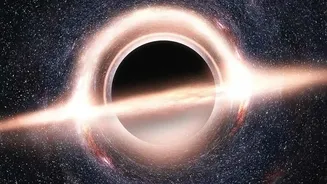
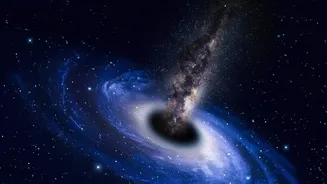
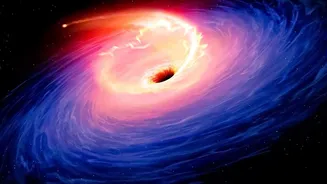
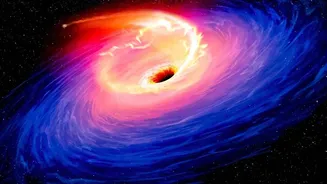
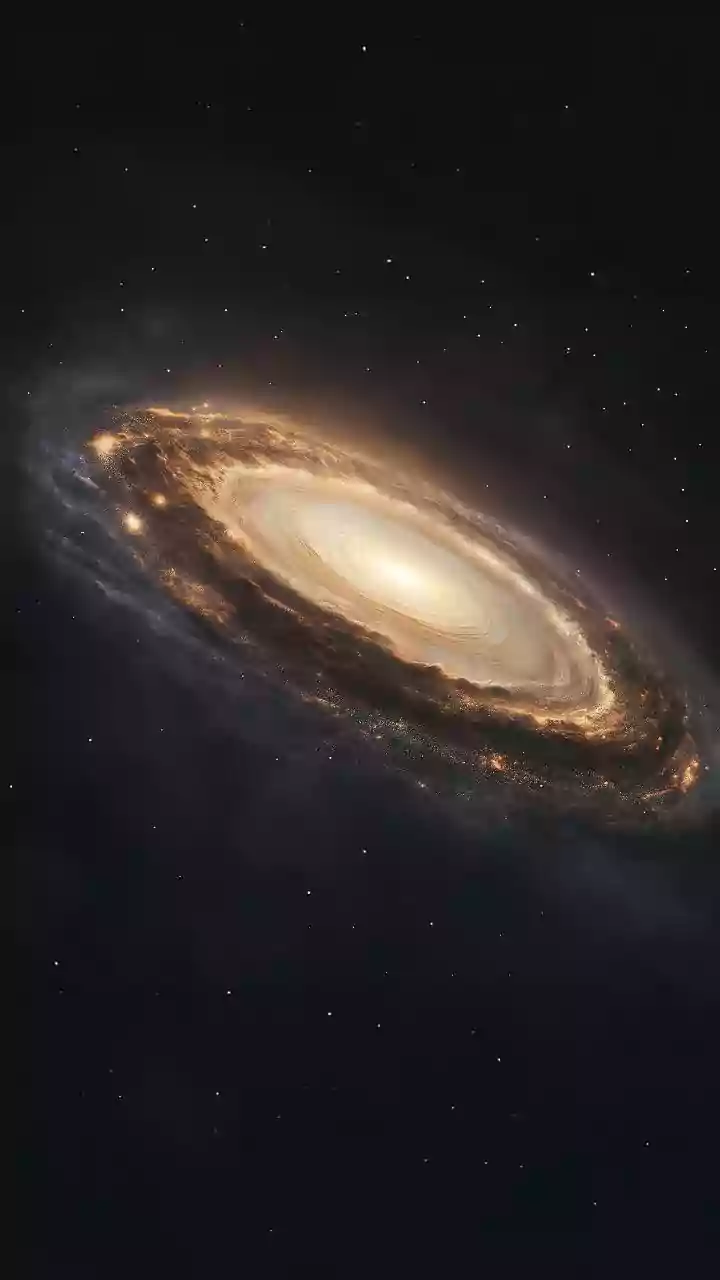
essentially what astronomers witnessed in a galaxy 750 million light-years away. A flare of light, briefly outshining the whole galaxy, was detected not in the galactic core, but about 30,000 light-years away in its sparse outer regions. Such an event, known as a Tidal Disruption Event (TDE), occurs when a star gets too close to a black hole and is violently torn apart. The resulting flare is the celestial equivalent of a dinner bell, and this one rang from a very unexpected location.
The Wanderers of the Universe
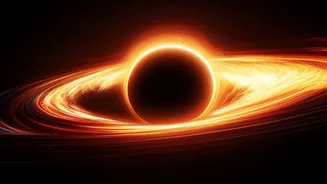
The very idea of a “wandering” black hole sounds like science fiction, but it is a long-standing prediction of cosmological models. The theory is that they are a byproduct of galactic mergers. When two galaxies collide, a chaotic gravitational dance ensues. Their central supermassive black holes will eventually sink toward the center of the new, larger galaxy. But sometimes, in the cosmic game of billiards that follows, one of the black holes—usually the smaller one—can be ejected from the core. It is then sent on a lonely journey, adrift in the vast, dark halo of the galaxy. Because these black holes are not actively feeding, they are invisible to us—ghosts roaming the cosmos.
Catching a Ghost Red-Handed
So how do you find something that's invisible by nature? You wait for it to give itself away. The off-centre flare was the crucial clue. After initial detection by ground-based surveys using artificial intelligence to comb through vast amounts of data, astronomers turned more instruments toward the event. NASA’s Neil Gehrels Swift Observatory played a key role in the follow-up. Its ability to observe in ultraviolet light allowed scientists to study the flare's temperature and characteristics in detail. The data confirmed that this was a classic TDE, the signature of a star being shredded by a black hole with a mass millions of times that of our sun. Finding this signature so far from the galactic center is the strongest evidence to date that a wandering supermassive black hole is responsible.
Why This Discovery Matters
Finding one wandering black hole is more than just a cosmic curiosity; it helps confirm our theories about how galaxies are built. The universe is a dynamic place where galaxies frequently collide and merge over billions of years. Our own Milky Way is a product of such mergers and is on a collision course with the Andromeda galaxy. Studying these wandering relics provides a fossil record of a galaxy's violent past. Each wanderer is a breadcrumb trail leading back to a past merger. By finding more of them—which this new technique of looking for off-center TDEs now allows—astronomers can better understand the turbulent history of the cosmos and the rules that govern the growth of galaxies and their monstrous central engines.