






A Legacy Reborn, Not Replaced
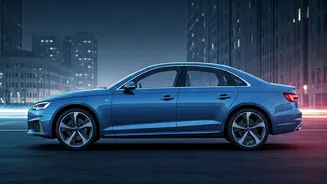
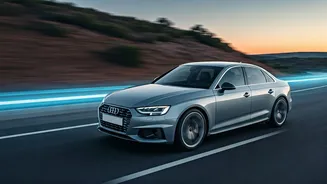
The Audi A4 has been a bestseller and brand-defining model since it replaced the Audi 80 in the mid-1990s. Its reputation was built on a foundation of sophisticated engineering, all-wheel drive confidence, and premium interiors powered by internal combustion
engines (ICE). The decision to discontinue the ICE version and reintroduce the A4 as a dedicated electric vehicle (EV) is therefore hugely significant. It represents a clear break from tradition and a firm commitment to an electric future, even as the brand adjusts its overall EV rollout timeline. This isn't just a new model; it's Audi planting a flag for its next generation.
The Naming Confusion and Correction
The path to the electric A4 has involved some confusing detours. In 2023, Audi announced a new naming strategy where even numbers would be reserved for EVs and odd numbers for ICE models. Under this plan, the traditional combustion A4 was set to be replaced by the new A5. However, this odd-even system caused significant confusion among customers and dealerships. Acknowledging the feedback, Audi reversed course, returning to a simpler structure where model numbers denote vehicle size, and powertrains are identified by suffixes like 'e-tron' for electric and 'TFSI' for gasoline. The 2028 A4 e-tron will be a direct result of this corrected strategy, bringing a legendary name into the electric era.
What to Expect from the Electric A4
The upcoming A4 e-tron, slated for a 2028 arrival, will be a ground-up EV designed to compete with the likes of the BMW i3 and the electric Mercedes-Benz C-Class. It will be one of the first vehicles built on the Volkswagen Group's next-generation Scalable Systems Platform (SSP), an advanced architecture intended to be more efficient and flexible than the current MEB and PPE platforms. The A4 e-tron will feature an 800-volt architecture, enabling ultra-fast charging speeds of up to 270 kW. While base models are expected to produce around 400 horsepower, a high-performance S4 e-tron variant is also planned, which could deliver over 510 horsepower. Critically for long-time fans, Audi's Chief Technical Officer has also confirmed that an Avant wagon variant will continue, preserving a key part of the brand's heritage.
A New Design Philosophy
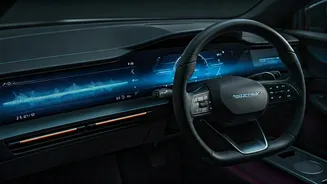
Beyond the powertrain, the 2028 A4 e-tron will showcase a new design language for Audi, first previewed by its Concept C show car. This new direction aims for 'clarity in design,' featuring cleaner surfaces and a more monolithic silhouette. This philosophy extends to the interior, where Audi plans a return to higher-quality materials and more physical buttons, addressing criticism that recent models have become too reliant on touchscreens and glossy black plastics. The goal is to restore the brand's reputation for setting the standard in premium cabin design and feel.
The Competitive Road Ahead
Audi's transition is part of a broader industry shift, but the company's timeline places it in a challenging position. Rivals BMW and Mercedes-Benz are already deep into their premium EV sedan offerings. By the time the A4 e-tron arrives in 2028, the market will be even more competitive. However, by leveraging the new SSP platform and pairing it with a beloved nameplate, Audi is betting it can reclaim its position as a leader in the premium segment. The success of the A4 e-tron won't just be measured in sales, but in its ability to prove that a legacy automaker can successfully transform its most iconic products for an electric world.