






What Exactly is Vertical Farming?
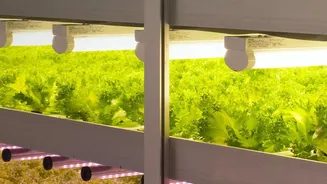
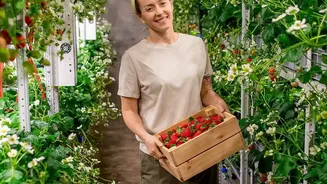
At its core, vertical farming is a method of growing crops in stacked layers, often indoors. Instead of planting in traditional horizontal rows in a field, this technique uses structures like towers or racks to cultivate plants upwards. For strawberries,
which have relatively small root systems, this method is particularly effective. These systems typically use soilless growing techniques like hydroponics, where plants receive nutrients through water, or aeroponics, which involves misting the suspended roots with a nutrient solution. The entire environment—from light and temperature to humidity and nutrition—is carefully controlled to create the perfect growing conditions year-round.
The Five-Fold Advantage Explained
The headline claim of fitting five times more plants isn't an exaggeration; in some cases, it's an understatement. Traditional strawberry farming might accommodate between 5,500 and 17,000 plants per acre, depending on the spacing. Vertical farms multiply this capacity by using the Z-axis. With multiple growing tiers stacked on top of each other, growers can dramatically increase plant density within the same square footage. Some commercial systems are designed to hold anywhere from four to eight vertical levels. Reports from the industry show that vertical farms can boost strawberry production by anywhere from four to over ten times that of conventional methods per unit of area. One company even boasts a farm designed to increase yields by more than 20 times.
More Than Just Maximizing Space
The benefits of going vertical extend far beyond simple plant density. One of the most significant advantages is water conservation. Controlled-environment systems can use up to 90% less water than traditional field farming because water is recirculated and delivered directly to the plants' roots with minimal waste. Because the environment is enclosed, the need for pesticides is drastically reduced or even eliminated, protecting crops from common ground-dwelling pests and diseases. This method also allows for year-round production, independent of seasons or weather, leading to a consistent and predictable supply of fresh berries. For consumers, this means access to locally grown fruit that doesn't have to be shipped long distances.
The Hurdles of High-Tech Farming
Despite the immense potential, vertical strawberry farming is not without its challenges. The primary barrier is the high initial investment. Setting up a commercial-scale vertical farm, complete with automated systems, climate controls, and specialized LED lighting, can be significantly more expensive than starting a traditional farm. Energy consumption is another major consideration. Replicating sunlight with powerful LEDs and maintaining a precise climate around the clock requires a substantial amount of electricity, which can lead to high operational costs and a significant carbon footprint if not powered by renewable energy. Finally, running a vertical farm requires a high level of technical expertise in both horticulture and technology to manage the complex systems and optimize growing conditions.
The Future of the Modern Strawberry
Vertical farming is rapidly moving from a futuristic concept to a practical solution. Companies like Oishii have opened large-scale vertical strawberry farms in the U.S., harnessing robotics and solar power to grow premium berries for an expanding market. This shift is part of a broader trend in agriculture, where technology is being leveraged to address challenges like land scarcity, water shortages, and supply chain vulnerabilities. As technology improves and costs decrease, vertical farms could play a crucial role in enhancing food security, particularly in urban areas. By bringing farms closer to consumers, this technology offers a model for producing fresh, high-quality fruit with a smaller environmental footprint, reinventing what it means to be a local farmer.