



The High-Stakes 'Chopsticks' Catch
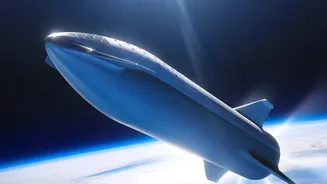
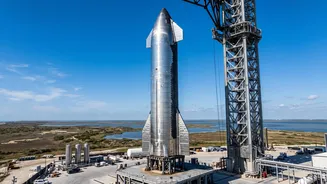
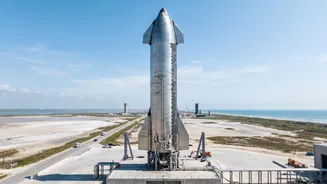
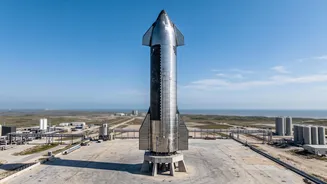
SpaceX's ultimate goal with Starship, the most powerful rocket ever built, is not just to launch it, but to relaunch it within hours, much like an airplane. Central to this vision is a massive launch tower nicknamed 'Mechazilla'. This tower is equipped
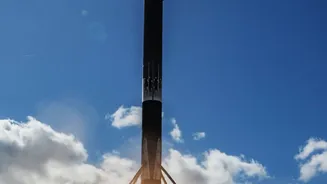
with two giant mechanical arms, often called 'chopsticks', designed to catch the 71-meter-tall Super Heavy booster as it returns from the edge of space. Catching the booster directly on the launch mount eliminates the need for heavy landing legs, which saves a significant amount of mass that can instead be used for payload. It also drastically cuts down the turnaround time required for the next flight, as the booster is already in position to be restacked, refueled, and launched again. This method is the linchpin of SpaceX’s business case for making space exploration and satellite deployment dramatically cheaper.
What Happened on Flight 15?
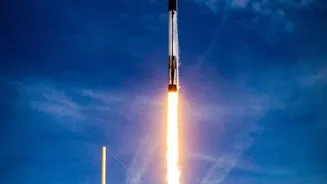
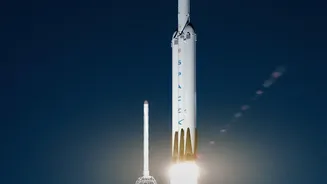
The 15th test flight of Starship on November 13 was set to be a landmark mission, with SpaceX attempting to catch both the Super Heavy booster and, for the first time ever, the Starship upper stage after its return from orbit. The launch itself was a success, with all 33 Raptor engines on the Booster 22 vehicle firing to propel the stack towards space. After separating from the upper stage, the booster began its journey back to the launch site. However, things did not go as planned. SpaceX confirmed that the booster's boostback burn, a critical engine firing to reverse its course, ended early due to a low fuel mass alarm. The rocket's onboard guidance, navigation, and control (GNC) system detected it was not in the correct position for a safe catch and automatically triggered an abort. The booster then correctly diverted to its contingency landing zone in the Gulf of Mexico, where its flight was terminated just above the water's surface.
A Successful Failure
While the dramatic booster catch was the most anticipated event, its failure does not tell the whole story of Flight 15. The mission was a partial success, achieving several major objectives and providing invaluable data. The Starship upper stage, Ship 42, successfully reached orbit, deployed a batch of 26 Starlink satellites, and remained in space for over 22 hours. More spectacularly, on November 14, the Starship vehicle successfully returned from orbit, survived a fiery reentry, and was caught by the Mechazilla arms—a historic first for an orbital-class upper stage. This achievement was hailed by SpaceX as a moment where 'everything changes'. Elon Musk noted that the slight underperformance of the booster's engines was the likely reason for the fuel shortfall. This kind of iterative 'test, fail, learn, repeat' cycle is a hallmark of SpaceX's development philosophy, where even an explosion provides critical data for the next attempt.
The Path Forward for Starship
The aborted booster catch underscores the immense difficulty of what SpaceX is trying to achieve. While the company had successfully caught three previous boosters, this was the first attempt with a newer 'Block 3' version of the vehicle. The loss of Booster 22 and its 33 advanced Raptor engines is a setback, but one the company has planned for. Engineers are now analyzing the flight data to pinpoint the root cause of the fuel issue and engine underperformance to implement fixes for the next flight. Elon Musk stated that the booster loss would not change the company's timeline for achieving high-volume, fully reusable flights. The focus will now shift to the next vehicles in the production line, with Flight 16 expected to fly with Booster 23 and Ship 43. This next flight may even occur from a different launch site, as SpaceX prepares its facilities at Kennedy Space Center in Florida. For SpaceX, the mission was a mix of triumph and learning, pushing the boundaries of rocketry one explosive step at a time.