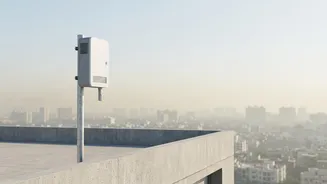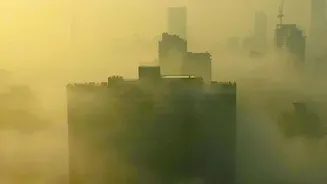





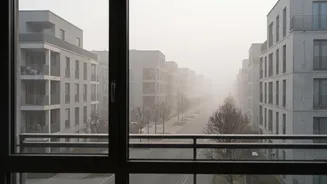
The crisp, clean air that followed the monsoon is fading fast. For residents of Delhi-NCR, the slight chill in the morning air brings a familiar sense of dread as the city's air quality begins its annual, sharp decline into the 'poor' category.
The Monsoon's Retreat, Pollution's Return
The official
withdrawal of the southwest monsoon from Delhi around September 23 marked a clear turning point. Without the frequent rain to wash pollutants from the atmosphere, and with wind speeds dropping, the air's capacity to clean itself has diminished. This seasonal shift is a predictable trigger. Data shows that the first week of October 2026 has been the most polluted in three years, with the average Air Quality Index (AQI) settling at 171. While still in the 'moderate' category, this is a significant jump and signals the start of the pollution season, where a cocktail of local and regional factors combine to trap pollutants over the capital region.
A Familiar Mix of Pollutants
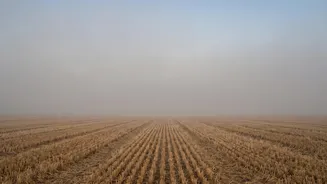
The deteriorating air quality is not caused by a single factor, but a combination of several. As temperatures drop, cooler, heavier air traps pollutants closer to the ground, a phenomenon known as temperature inversion. This is compounded by emissions from several key sources. First, farm fires in neighbouring states like Punjab, Haryana, and now increasingly Madhya Pradesh, have begun. Smoke from this stubble burning is carried by northwesterly winds towards Delhi. Adding to this are local sources that plague the city year-round but become more potent in winter: vehicular emissions, industrial pollution, and dust from construction sites and roads. Even during the heavy monsoon, Delhi recorded only one 'good' air quality day, indicating that baseline pollution levels remain dangerously high.
GRAP Gets Tougher
In anticipation of the worsening conditions, the Commission for Air Quality Management (CAQM) has revised and strengthened the Graded Response Action Plan (GRAP). GRAP is an emergency framework that enforces progressively stricter anti-pollution measures as the AQI worsens. This year, several restrictions have been brought forward. For example, curbs on certain inter-state buses and diesel generator sets will now apply from Stage I ('Poor' AQI) instead of Stage II. Stage I is triggered when the AQI is between 201-300. Stage II (Very Poor) activates at 301-400, Stage III (Severe) at 401-450, and Stage IV (Severe+) above 450.
What The New Rules Mean For You
For residents, these updated plans will have tangible impacts. The 'No PUCC, No Fuel' rule is being enforced more strictly, with fuel stations instructed not to serve vehicles without a valid Pollution Under Control Certificate, with violators facing a potential ₹10,000 fine. From November 1, non-BS-VI vehicles registered outside Delhi will be barred from entering the city. During more severe pollution stages, expect doubled parking fees to discourage private transport, restrictions on BS-III petrol and BS-IV diesel cars, and potential work-from-home mandates for offices. The CAQM is also expanding its monitoring of construction sites and industrial units to ensure compliance with dust and emission norms.
A Battle on Multiple Fronts
Tackling the stubble burning issue at its source remains a priority. The Central Pollution Control Board (CPCB) has deployed 44 flying squads to districts in Punjab and Haryana to monitor farm fires on the ground and coordinate with local authorities to prevent them. These teams will be active from October 1 to November 30, the critical harvesting period. While data has shown a decline in fire counts in Punjab and Haryana in recent years, the challenge persists. This year, a peaking El Niño weather pattern is also a concern, as it may lead to a drier winter with less rain to wash away accumulated pollutants, potentially making the situation worse.